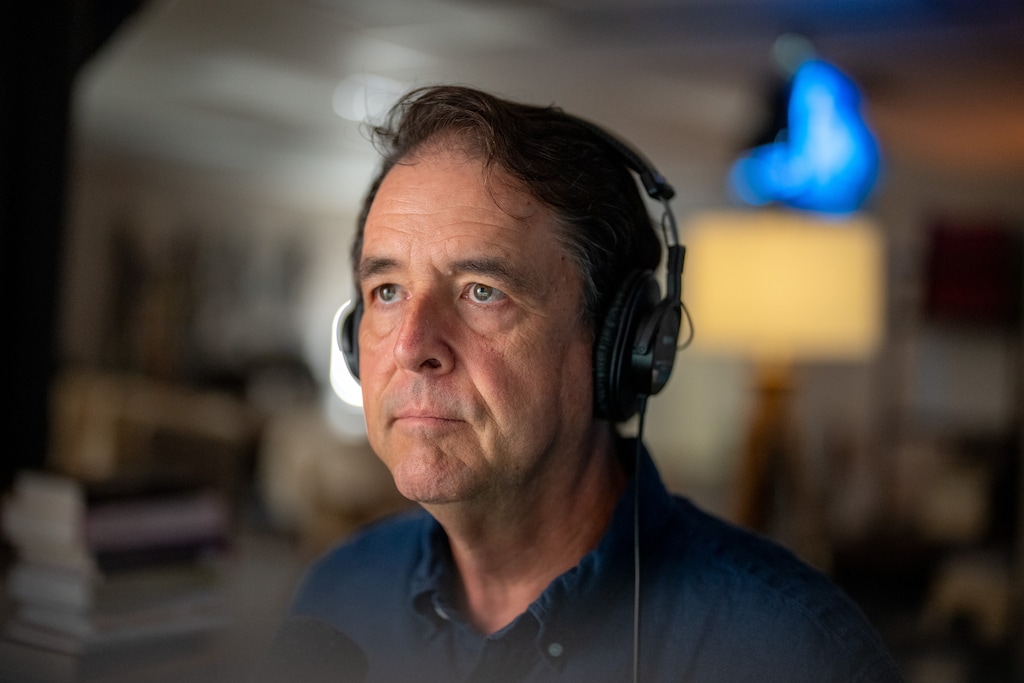
 Tamarra Kemsley
The lawyers representing “Mormon Stories” podcaster John Dehlin in his legal battle against The Church of Jesus Christ of Latter-day Saints have seized upon what they believe to be fresh ammunition.
The source: a recent interview by an attorney for the Utah-based faith on a popular, church-friendly podcast.
The church sued Dehlin, host of the long-running “Mormon Stories” podcast, in April for alleged trademark infringement. In response, the prominent church critic, who was excommunicated in 2015 for “apostasy,” accused the deep-pocketed faith of weaponizing the law to silence him and monopolize use of the “Mormon” term.
The religious organization denies this characterization of the case. But Dehlin’s lawyers believe they have uncovered more evidence of their framing in a recent appearance by David Jordan, an attorney for the church, on the show “Keystone.”
‘Bad Mormon’ and the likelihood of confusion
In a video that has been viewed nearly 70,000 times since its launch six days ago, Jordan rejects Dehlin’s argument that the church is trying to dictate who can and can’t use the M-word.
“Nobody,” Jordan said, “owns the word ‘Mormon.’”
Rather, explained Jordan, a former U.S. attorney for Utah, the problem rests with Dehlin combining the name with copyright imagery and branding elements similar to the church’s own visuals — many of which Dehlin has since swapped out.
(Trent Nelson | The Salt Lake Tribune) John Dehlin and his team of lawyers have described the church's lawsuit as an attempt to silence a critic, a framing the faith rejects.
Add these things together, Jordan said, and the likelihood increases that an audience member might mistake the podcast for an official church product.
To underscore this point, the attorney drew a contrast to the term “Bad Mormon,” the title of the memoir by former Latter-day Saint reality TV star Heather Gay.
“If you see the words ‘Bad Mormon,’ you’re not thinking,” Jordan said, “‘Oh, I bet that’s affiliated with the church.’”
And yet, Dehlin’s team argues in Monday’s federal court filing, the church did petition in 2022 to deny Gay’s application to trademark “Bad Mormon,” insisting the public was likely to confuse such products as directly tied to the church.
Gay withdrew her application in 2024.
“After feeling pushed around for long enough,” she told The Salt Lake Tribune this week, “I ultimately abandoned it.”
What these events show, Dehlin’s legal team maintains in the latest filing, is that “even when the church knows there is no infringement or likely confusion, as Mr. Jordan admits, the church and its attorneys nonetheless intentionally misuse federal trademark law as a tool of coercion, wielding the burdensome process (rather than genuine merits) to compel changes and control how ‘Mormon’ is used by others.”
‘That’s just not true’
Dehlin’s attorneys previously asked the court to dismiss the lawsuit, a move supported in the form of amicus briefs by the American Civil Liberties Union of Utah and the free speech nonprofit Electronic Frontier Foundation.
A church spokesperson declined to comment on Dehlin’s latest filing. In the past, however, spokesperson Doug Andersen has dismissed the notion that the faith is trying to silence a critic.
“The church has always acknowledged Mr. Dehlin’s First Amendment right to criticize the church, and this case is not about preventing people from using the word Mormon,” Andersen said. “It concerns the use of church-protected names, images and design elements, which, in the collective, create confusion when it comes to knowing whether the content is affiliated with the church.”
The faith’s lawyers affirmed that contention in a previous court filing.
“The church’s claims do not target the content of defendants’ speech at all,” they wrote in August. “Nor is it about ownership or control of the word Mormon.”
Instead, they add, the case is “about eliminating the confusion caused by defendants’ mimicking the church’s trademarks and using its copyrighted images without permission.”
(Chris Samuels | The Salt Lake Tribune) The Church Administration Building in Salt Lake City. The faith argues in its lawsuit that it is not trying to silence John Dehlin or "Mormon Stories."
Jordan, meanwhile, stated in his “Keystone” appearance that the whole case could be resolved if Dehlin agreed to add a verbal disclaimer of nonaffiliation with the church at the beginning of his podcast and insert a written version prominently in the show’s description.
Do that, he said, and Dehlin could keep the name of his show as is.
“When people talk about this as a David and Goliath story,” Jordan said, “or they talk about us trying to put Mr. Dehlin out of business, that’s just not true.”
Asked why he declined to take the offer, Dehlin responded Tuesday that he agreed to add a written disclaimer to the description of the podcast but drew the line at a verbal statement.
He said he searched hundreds of religious-themed podcasts and YouTube channels in search of anything like what the church was suggesting and came up empty-handed.
“We followed the industry standard,” Dehlin said, “and don’t think the church has any grounds to require exceptional exceptions.”
Heather Gay responds
For her part, Gay described Jordan’s comments as “incredibly frustrating.”
And a bit emboldening.
“Given their clarification now,” she mused, “maybe it’s time for me to file a new trademark application.”
(Randy Shropshire | Bravo) Heather Gay poses next to the cover of her memoir, "Bad Mormon."
And why stop at the “Bad Mormon” sweatshirts and mugs she had initially envisioned?
“I’m already imagining,” she said, “‘Bad Mormon’ dirty soda shops, ‘Bad Mormon’ bookstores and ‘Bad Mormon’ restaurants.”
Her advice to Dehlin: “Don’t be intimidated into backing down the way I was. I know firsthand that when an institution with this much power and money challenges you, it can be exhausting and overwhelming. But that doesn’t mean you should give up. Keep fighting for all of us.”