 Dylan Eubank
Shirlee Draper grew up amid little contact with the outside world.
She was born and reared in Colorado City, Arizona, within the polygamous Fundamentalist Church of Jesus Christ of Latter-Day Saints.
In this tight-knit outpost, Draper was placed in an arranged marriage and eventually had four children. But any peace in her life became temporary, she said, under FLDS leader Warren Jeffs. He started practices that Draper called “disagreeable to my soul.” (Jeffs was convicted in 2011 of sexually assaulting two underage girls and is serving time in a Texas prison.)
So Draper decided to flee.
“I took my children and left,” she said. “But it was really, really difficult to leave the community because I was so entirely dependent on them for everything.”
Draper said she felt stuck. The house she lived in belonged to the church. She had no income and no rental or credit history. It seemed that there was no one to turn to and nowhere to go.
This experience led her to create the nonprofit Cherish Families with co-founder Alina Darger, one of three wives in the Darger polygamous family who went public in 2011 to advocate for the decriminalization of polygamy.
About Cherish Families
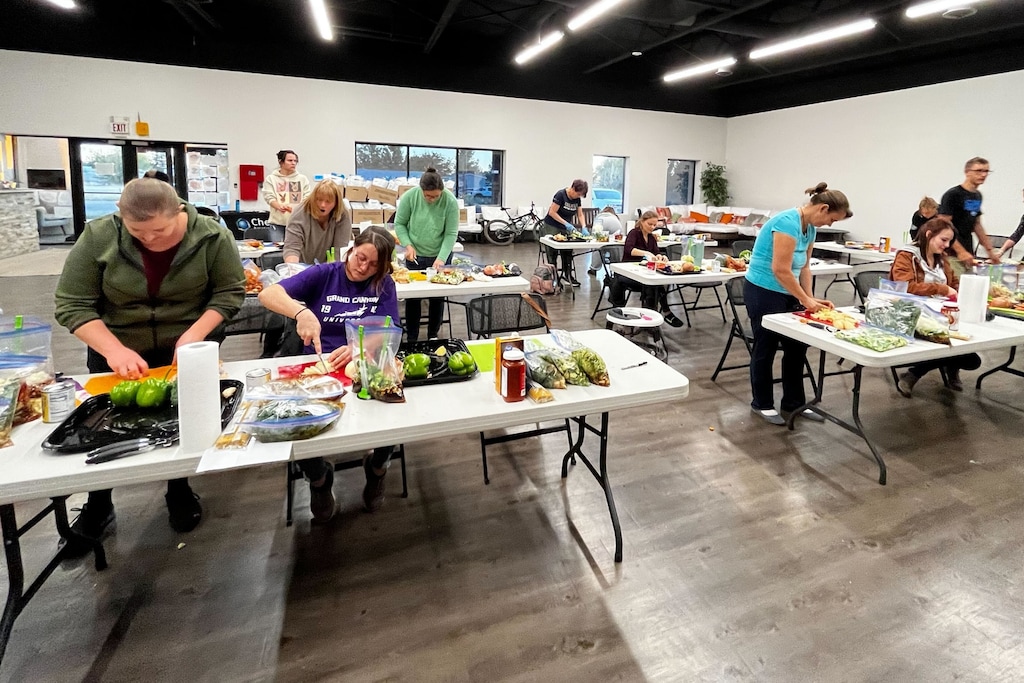
(Cherish Families) A Cherish Families office in southern Utah helps individuals and families — primarily from polygamous backgrounds.
Cherish Families is a support and advocacy group that helps individuals and families — primarily from polygamous backgrounds — secure the assistance they need to turn their lives around.
Darger said the organization also acts as a “bridge” of understanding between these populations and state agencies, connecting families in need to resources for counseling, food aid and housing services.
(Cherish Families) Shirlee Draper, left, and Alina Darger are the founders of the nonprofit Cherish Families.
In addition, Cherish Families provides cultural sensitivity trainings for various agencies across Utah to show the needs of polygamous communities.
The group’s mission, as stated on its website, is to move “families from crisis to thriving for generational success.”
Since people’s needs vary, Darger said, Cherish Families tailors services to individuals to best assist them.
On one occasion, Draper recounted, a mom who was living in her car reached out for help. She said Jeffs directed that her children be taken from her, and she needed to find legal assistance.
The two walked her through the court system and helped her find the resources she needed to get legal custody of her children, along with housing for the family.
“We’re able to help a family and say, ‘What’s the most important thing right now,’” Draper said. “And then what’s next?”
Through the years, Cherish Families has partnered with multiple groups, including the Utah Department of Workforce Services, the Department of Health and Human Services, the Utah Food Bank, the Elizabeth Smart Foundation and dozens of others.
Law change was a game changer
(Cherish Families) Staff from Cherish Families and Shirlee Draper, middle right, and Alina Darger, middle left, assist individuals and families coming from polygamous backgrounds.
Draper said she wished she had known about those resources when she exited the FLDS community.
By the time she was 33, Draper had saved up enough money to take her children and leave the polygamous settlement.
But her challenges didn’t cease. For starters, polygamy remained a felony in Utah. She wasn’t sure whom to turn to for help.
“I might as well have been dropped off from the mother ship,” Draper said. “I was a woman who was in a plural marriage. When I was trying to leave, I was a felon. And I couldn’t go to resources and authorities that I perceived existed because of that barrier.”
Against these odds, she made her way, moved to the Beehive State and completed a master’s degree in public administration from the University of Utah.
Others fleeing similar circumstances began reaching out to Draper for help and advice. She then realized there was a huge administrative gap in assistance for people from polygamous circles partly due to social stigmas.
She met Darger when she was attending the U., and the two began mapping out how to help others fleeing polygamous communities.
The two started small and began linking individuals to various agencies, such as the Utah Domestic Violence Coalition and the Utah Office for Victims of Crime. Eventually, they received a federal grant that gave Draper and Darger the funds they needed to expand into Cherish Families.
It all changed, Draper said, when Utah decriminalized polygamy in 2020.
That move opened up the door for more conversations, leading to collaborations with the courts, law enforcement, hospitals and schools.
“It really changed the perspective of so many people and the way that we’re able to have conversations,” Draper said. “Now the conversation can be, ‘How do we reach an underserved population, and how do we reduce harm?’”
Thirteen years later and Cherish Families is still growing.
The greatest reward, Darger and Draper agreed, is to see family members who were once suffering now thriving.
“It was important to us,” Darger said, “to create community, bring people together, help us understand each other and not just build something in a silo.”
Cherish Families serves clients statewide with offices in Alpine and Hildale. Individuals seeking aid can call or reach out through the nonprofit’s website.
Note to readers • Dylan Eubank is a Report for America corps member covering faith in Utah County for The Salt Lake Tribune. Your donation to match our RFA grant helps keep him writing stories.