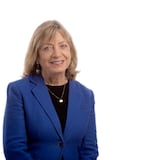
Peggy Fletcher Stack
In the final entry of her extraordinarily detailed four-volume memoir, legendary Latter-day Saint writer Carol Lynn Pearson noted wryly, “Even though we believe in eternal life, a book must have a page on which is written ‘The End.’”
The generous but always outspoken Pearson then thanked readers for traveling “the long road with me, observing one woman navigating her life as a Latter-day Saint, as a feminist, as an activist for LGBT causes, as a mother, a friend, a seeker of God, a discoverer of godliness, a woman of laughter, a woman of grief, a celebrator of light.”
Now the book has closed on Pearson’s incredible life story.
The dynamic poet, playwright and advocate — heralded as a hero by many members of The Church of Jesus Christ of Latter-day Saints and beyond — died of uterine cancer late Wednesday in a Northern California hospital near her home. She was 86.
“Carol Lynn Pearson was both one of a kind and also a spokesperson for her generation,” Latter-day Saint historian Benjamin Park told The Salt Lake Tribune on Thursday. “She was committed to the community, serious about the gospel, and critical of the institution’s flaws. Her poetry and plays made her a favorite for LDS leaders, granting her access and protection rarely matched. She observed, identified and dissected gender inequalities that make her perspective as fresh in 2026 as they were in the 1960s. She later dedicated her life to highlighting the voices and experiences of queer Mormons, serving as a bridge between generations of activists.”
Park doubts “there is another person today who holds a similar position that she did in the late 20th century: loyal to the faith, critical of the institution, yet connected to the leaders. Her legacy is that of a bygone era.”
The historian added: “She once wrote that she was married to the Mormon people, a community she cherished, and tolerated her husband’s onerous grandfather, the institution. The Mormon people were truly blessed to have her as a companion, and the institution would have done well to listen to her.”
Family members also were awed by her.
Pearson “surprised, inspired and charmed everyone who knew her,” said Utah artist Kathleen Peterson, who was her cousin. “And she never gave up.”
[Listen to The Salt Lake Tribune’s “Mormon Land” podcast with Carol Lynn Pearson from June, the final media interview with the legendary writer. Read excerpts from that show and passages from her diaries.]
An unexpected life
(Francisco Kjolseth | The Salt Lake Tribune) Carol Lynn Pearson, who championed the ERA in the 1970s, speaks at a rally on Women’s Equality Day at the Utah Capitol in 2021.
The famed writer was born in Salt Lake City on Sept. 27, 1939. Eight years later, she moved to the tiny eastern Utah town of Gusher on the Uintah and Ouray Reservation, where, she reported in "The Diaries of Carol Lynn Pearson, Volume 1," “the family of seven lived in a two-bedroom farmhouse with no electricity or running water.” In 1952, the family moved to Provo, where the loquacious teen entered Brigham Young High School.
She began keeping a nearly daily diary when she was a senior in 1956 — and she never stopped. The first volume reads like a chronicle of Mormonism’s intellectual history from the 1960s through the 1980s.
Pearson, who next attended Brigham Young University, exploded onto the scene in 1970 with her first poetry book, “Beginnings,“ which sold an astounding 150,000 copies, making her one of Mormonism’s earliest literary celebrities.
The feisty writer and fourth-generation Latter-day Saint went on to produce several more bestsellers, including “The Ghost of Eternal Polygamy: Haunting the Hearts and Heaven of Mormon Women and Men” and “No More Goodbyes: Circling the Wagons Around Our Gay Loved Ones.”
She also penned plays including “Mother Wove the Morning,” “Facing East,” “The Order Is Love,” and a popular musical, “My Turn on Earth.”
Pulitzer Prize-winning historian Laurel Thatcher Ulrich said in an email that she appreciated Pearson’s efforts “to awaken the church leaders to their marginalization of its faithful women and their mistreatment of gay men.”
(Salt Lake Tribune archives) Pulitzer Prize-winning historian Laurel Thatcher Ulrich praised Pearson's efforts on behalf of Latter-day Saint women.
Ulrich also recognized the poet’s “deep commitment to her own children, a commitment that shines through in some of her best-known plays. For me that would be ‘The Order Is Love,’ which was performed in a Portsmouth (New Hampshire) Ward in the 1970s. ... My children have never forgotten that performance.”
But it was Pearson’s 1986 book, “Goodbye, I Love You,” that catapulted her to widespread acclaim.
In it, Pearson shared her story of falling in love with Gerald Pearson, having children with him, letting him go to live as a gay man, and welcoming him back to care for him as he died of AIDS. She was interviewed by Oprah Winfrey, People magazine and “Good Morning America,” which helped burst open a national and religious conversation about the then-taboo topic.
(Salt Lake Tribune archiveS) Carol Lynn Pearson in a 1994 photograph promoting her play "Mother Wove the Morning."
When Barbara Jones Brown was a 19-year-old girl in early 1987, her mother handed her a copy of “Goodbye, I Love You” and urged her to read it.
The account “moved me to profound compassion for the gay community in what was a worldwide AIDS crisis,” said Brown, now director of Signature Books. “It was the first influence that led to me becoming an LGBTQ ally. More than anything, Carol Lynn’s book led me to pursue my dream to become a writer.”
That 19-year-old girl who recorded these dreams in her diary “would have been astonished to know that she — some 40 years later — would be privileged to work with Carol Lynn Pearson to publish her diaries,” Brown said. “I am well aware that I’m just one of countless people whom Carol Lynn has inspired throughout her long life.”
(Barbara Jones Brown) Signature Books director Barbara Jones was inspired by Carol Lynn Pearson to become a writer.
Indeed, Pearson told Brown recently that “Goodbye, I Love You” was “something I was called to do.”
After it emerged, the writer received numerous letters from “gay men who had planned their suicides,” Pearson said, “and when they read the book, they decided, ‘I need to be here. I deserve to be here. I deserve to have my life the way that I am.’”
Randall Thacker collaborated regularly with Pearson over about a decade while serving in the leadership of Affirmation: LGBTQ Mormons, Families & Friends and this included numerous visits to her California home.
“The most uplifting parts of my visits were that she would take me on a walk up to the top of a hill in Walnut Creek and once we reached the summit, she would offer a prayer for the world,” Thacker recalled Thursday. “She would lift her hands and pray for the world, while slowly turning 360 degrees. The prayer always included praying for the church and the brethren [male leaders] as she faced east and would also include a prayer for all those who are marginalized and suffering and relevant things happening in the world.”
It was not “a short prayer,” he said. “She said everything she thought without holding back — raw, honest, pouring her heart out to God. She was 100% authentic in her desire to bless the world. She said many times that she truly believed that ‘God is love.’”
A loyalist wrangles with authority.
In her diaries, Pearson recounted conversations with top Latter-day Saint leaders, including Dallin Oaks, the faith’s current top leader and whom she knew as BYU president when she was a student, and longtime women’s Relief Society General President Belle Spafford.
Her candid accounts detail her remarkable highs (great professional successes) and disheartening lows (“I have about 6 dollars in my purse, less than 20 in the bank, and none of this month’s bills paid”). She mentioned church leaders who treated her with respect and compassion and those who demeaned and dismissed her. And she named names.
Church historian Leonard Arrington praised her and promoted her feminist work, Pearson wrote. General authority Seventy Marion D. Hanks was a mentor, champion and confidant. Apostle Robert Hales told the poet “he loved me as much as the law allowed,” she wrote, and that he would work to get one of her poems into church magazines.
Others, including apostle Boyd K. Packer, she wrote, worked to block her work from those same magazines.
She described, for example, an article of hers that was accepted for publication by the Ensign, then the church’s official magazine. It was ultimately pulled for concerns that Pearson was, she wrote, “becoming known as a spokesman for the ERA [Equal Rights Amendment].”
That was, she reported, “the first major defeat of Carol Lynn Pearson in her work for a better image of the Mormon woman. But the battle is one of years, a whole lifetime, and I still have a great deal of energy and determination — as I learned from Joan of Arc, whom I played on the BYU stage. ‘What I have done I will not denounce. What I am, I will not deny.’”
Yet to the end, Pearson remained a devoted Latter-day Saint but unwilling to keep silent about her concerns for women in the church.
Pearson said on The Tribune’s “Mormon Land” podcast in June — her final media interview — that she had discarded some of the church teachings that she found harmful but embraced a lot of other teachings.
“This strange, beautiful, wonderful, bizarre church of ours is a great way to go through life,” she said. “It just is. It has given me just so many helpful, interesting things along the way.”
A final poem
(Salt Lake Tribune archives) Author Carol Lynn Pearson: 1939-2026.
On Oct. 27, 1961, Pearson wrote in her diary, “I would rather be a poet than a prophet — I mean a real poet. A prophet has to be told that his words are divine. A poet knows it intuitively.”
And so on her last entry of the final volume, which she concluded in 2024, she added a poetic wish for mourners:
TO THOSE WHO HAVE LOVED ME
When I am gone
Let me lie in state
in your heart
for a day or two
or more.
Then plant me
deep in the soil
of your best work
And let me help
toward harvest.
Remembering Carol Lynn Pearson
At the Sunstone Symposium on Friday at the University of Utah, a tribute will commemorate the 40th anniversary of her groundbreaking book “Goodbye, I Love You” and the 20th anniversary of her play “Facing East.”
The session is in the student union building from 10:25 to 11:55 a.m.
A “grieving session” is planned at 1:20 p.m.