facebook-pixel

Letter: Responsible forest management is not simply another name for logging

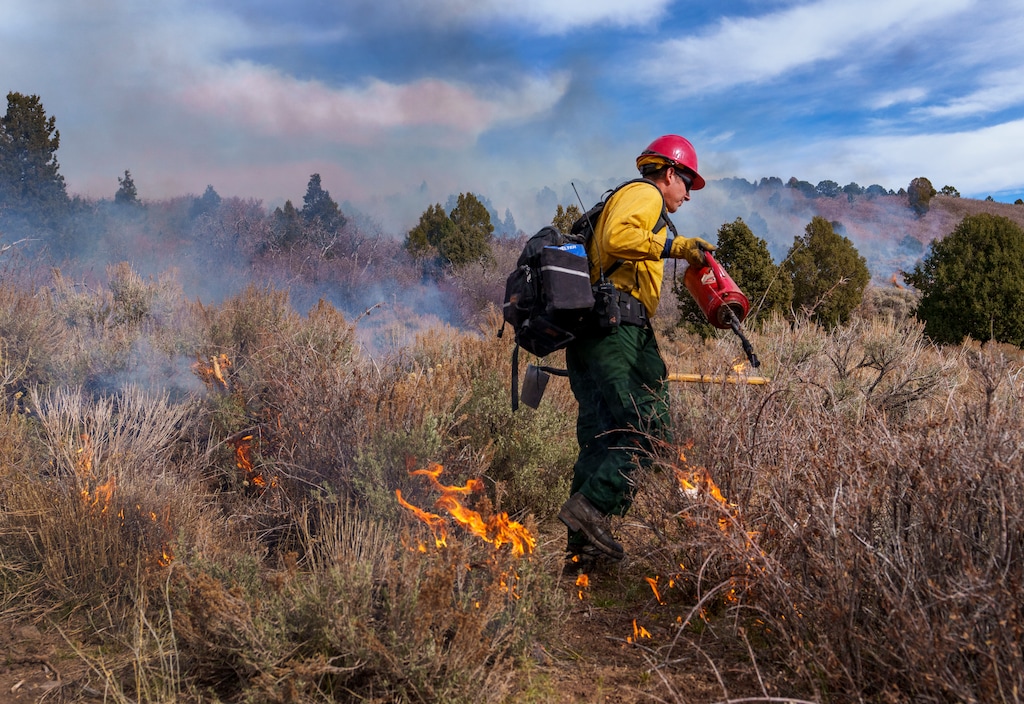
(Leah Hogsten | The Salt Lake Tribune) Brian Frisby, a fire operations specialist with the Bureau of Land Management in Fillmore uses a drip torch to start a prescribed burn within Fish Lake National Forest, Saturday, Nov. 6, 2021.

(Leah Hogsten | The Salt Lake Tribune) Brian Frisby, a fire operations specialist with the Bureau of Land Management in Fillmore uses a drip torch to start a prescribed burn within Fish Lake National Forest, Saturday, Nov. 6, 2021.

The recent Public Forum letter criticizing the Fix Our Forests Act (FOFA) raises legitimate concerns about protecting forests and addressing climate change. But portraying the bipartisan legislation primarily as an effort to expedite logging misses much of what the bill is intended to accomplish.

Climate change is making wildfires more dangerous, while decades of fire suppression and accumulated fuels have also left many Western forests unusually vulnerable to catastrophic fire. We need to address both problems.

Recent research provides a striking example. Scientists examined 164 forest plots burned during California’s massive 2021 Dixie Fire. In untreated forests, there was a 58% probability that every tree in a plot would be killed. Thinning alone lowered that risk to 48%. But where thinning had been followed by prescribed fire, the probability of complete tree mortality fell to just 4%.

That distinction matters. Responsible forest management is not simply another name for logging. The research suggests that thinning alone provides limited protection unless surface fuels are also addressed. Prescribed fire was a critical part of the treatment.

Utah’s national forests have already been expanding the use of prescribed burns and other treatments to improve forest health and resilience. And after this summer’s destructive Utah fires, state leaders have again called for more active forest management and congressional action on the Fix Our Forests Act.

None of this diminishes the need to address climate change, nor should forest treatment become a blank check for commercial logging. Environmental safeguards and public involvement remain important.

But leaving every forest untouched is not necessarily the environmentally protective choice. Carefully reducing excess fuels and restoring beneficial fire can greatly improve some forests’ chances of surviving a megafire.

Climate action and science base forest management are not competing solutions. We need both.

Karen Jackson, Salt Lake City

Submit a letter to the editor

Support free news for Utah

sltrib.com is now free to access — no subscription required. We made this decision because we believe access to trustworthy, independent news shouldn’t depend on what you can afford — especially as misinformation and AI-generated content continue to rise.

Free to read doesn’t mean free to produce. Our reporters show up every day to ask hard questions and hold powerful institutions to account. That work takes resources. As a nonprofit newsroom, we rely on support from people who believe it matters. Make a donation today to fund local news that serves Utah communities.

You can help us bring more local news to more communities today.