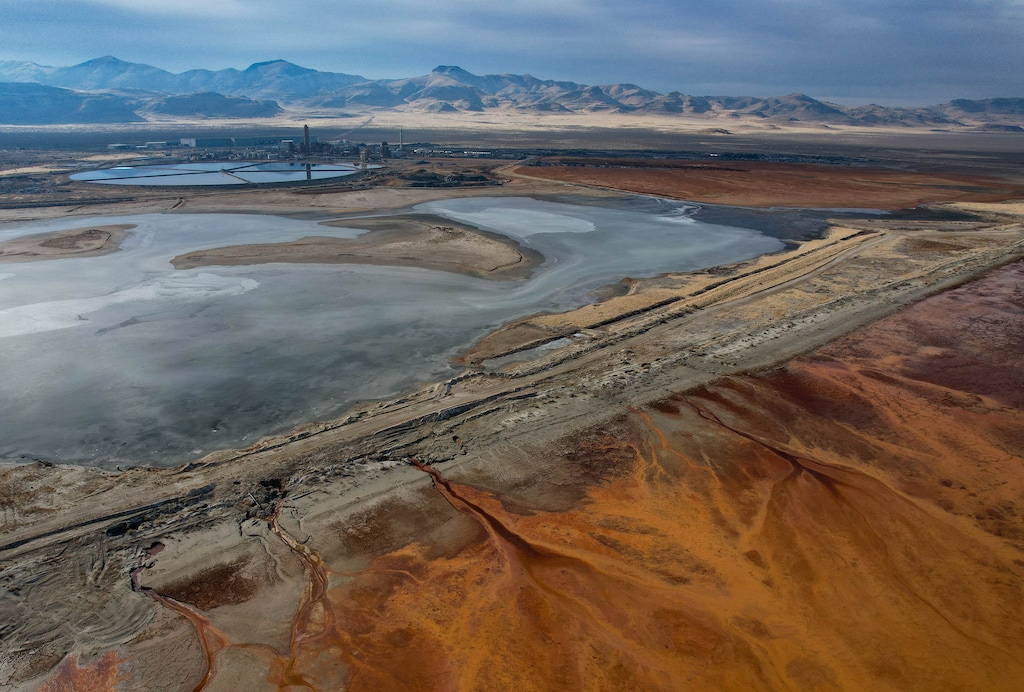
The former U.S. Magnesium site, on the southwestern shore of the Great Salt Lake, was home to the country’s only domestic production of magnesium, a critical mineral of national-security importance. Now it’s better known as an environmental albatross, with decades of impact on air, land, and water, leaving Utah holding the bag.
Nobody was willing to help solve the environmental cleanup. And nobody was willing to dedicate innovation, know-how and resources to design a better, more responsible way of mining and refining critical minerals.
The company I lead, Mariana Minerals, just took it on.
Now we’ll restore this Rowley site. The state, Tooele County and the local community will be our partners, with a restart plan that brings significant investment and jobs to the area — and puts the protection of the Great Salt Lake at the center.
In 2009, EPA added the 4,500-acre site to its federal Superfund list, meaning that the land was contaminated and posed a risk to human health or the environment. The site’s prior operations negatively impacted the Great Salt Lake, regional air quality, groundwater disposal and surrounding wetlands. At one point, the site accounted for 92% of Utah’s toxic air emissions.
Utah leaders stepped in earlier this year to stop the bleeding. The state paid $30 million for the site, securing more than 144,000 acre-feet of water rights and greater say in how the lake would be protected. The Division of Forestry, Fire, and State Lands then opened a competitive leasing process to find an operator willing to help fund the environmental cleanup and revive the site’s resource potential in a fundamentally different way. It selected Mariana to lead that effort and negotiate the terms for a restart.
We aren’t new to Utah or to sites where others have given up. In late 2025, Mariana acquired the Lisbon Valley Mine, a copper mine in San Juan County with about 60 full-time employees. Today the site is Copper One, and we’re applying new, autonomous technologies to modernize mining operations and reinforce environmental protections, while planning for a workforce of more than 300. We’re also building a state-of-the-art recycling facility to process domestic copper scrap at home rather than shipping it abroad, often to foreign adversaries. Our approach rests on safer work sites, precise operations and environmental standards that are measured and reported in the open. We’ll apply the same model at Rowley.
When Mariana evaluated the Rowley site, we understood that the cleanup and remediation must come first. Our plan will operate in phases, with the initial restart aimed at accelerating lithium processing from piles of minerals already sitting onsite. Revenue from that near-term production will be available to the state to pay down the environmental obligations. In parallel, we’ll evaluate opportunities for concurrent environmental remediation and reclamation with federal and state agencies; just like we’ve done at Copper One in San Juan.
Protecting the Great Salt Lake is the priority. Our phased approach will start with mineral deposits already available, so we won’t need to develop brine resources from the Great Salt Lake for decades. Even then, any future supplemental use of lake water would require a jointly developed water-management plan with the state that protects the Great Salt Lake — full-stop — with the goal of net-neutral water use over the life of the asset.
We recognize the significance of this project and what’s at stake. While we now have the responsibility, we’re not going at it alone. We’ll restore the Rowley site in public, building support from the ground up. We’ve already met with policymakers, regulators, conservation groups and local leaders to discuss our proposal and gain input from the start. We’ll continue to do so and engage constructively and transparently.
Well before we submitted our proposal to the state, we had a team of Mariana employees onsite conducting diligence and evaluating the operational mechanics of a restart. With the state’s selection, we’re deploying a team of dozens of employees, including executive leadership, to kick off the work. Going forward, we expect a full restart to support more than 200 direct, full-time jobs in Tooele County, along with work for local suppliers and contractors, partnerships with Utah’s universities, and apprenticeship programs with local trade and high schools.
For decades, this site has left Utahns with an environmental burden and legacy of broken trust. We see an opportunity to restore Rowley into a model for responsible minerals production with environmental stewardship at the forefront.
We’ll earn trust through our actions; not promises. Hold us to that. Because this time, it’s different.
(Turner Caldwell) Turner Caldwell is the co-founder and CEO of Mariana Minerals.
Turner Caldwell is the co-founder and CEO of Mariana Minerals.
The Salt Lake Tribune is committed to creating a space where Utahns can share ideas, perspectives and solutions that move our state forward. We rely on your insight to do this. Find out how to share your opinion here, and email us at voices@sltrib.com.