As a sophomore at Saint Joseph Catholic High School in Ogden, I believe that Utah cannot afford to use enormous amounts of water for data centers while one of our most important natural resources is already shrinking.
Growing up in Utah, I have learned that conserving water is a responsibility everyone should share. However, it doesn’t make sense to me that ordinary Utahns are expected to make sacrifices when wealthy developers and large corporations place even greater demands on the same resources while communities live with the consequences.
If conserving our resources truly is a shared responsibility, then we should all have to do our part.
As the western United States faces the worst megadrought in 1,200 years, scientists estimate that the Great Salt Lake could dry up within three to five years without action. I care about the lake because its future not only affects Utah’s economy and jobs, but also the weather, wildlife, and the health of communities along the Wasatch Front, including my own.
The lake provides up to 9,000 jobs for industries working directly with the lake, and up to 20,000 from the “lake effect” which supports local ski industries. I don’t know exactly what my future will look like, but I do know that I want Utah’s communities, jobs and natural resources to stay strong. Protecting the lake isn’t merely about saving an ecosystem. It’s about protecting the future of the state as a whole.
The lake effect also contributes to Wasatch Front precipitation, but a smaller lake means fewer storms can form. In fact, Utah recorded its lowest amount of snowpack in 2026. The 2034 Winter Olympics are only eight years away. It’s upsetting to know that the “greatest snow on earth” might not be the same by then. As a skier myself, I love enjoying our snow, but the lake’s decline makes me worry about what Utah’s winters could look like in the future.
Each year, more than 10 million migratory birds use the Great Salt Lake to rest and feed along the Pacific Flyway. Many of those birds eat brine shrimp, an important crustacean in the lake’s ecosystem. Rising salinity levels and decreased water shrink their habitats. If these shrimp were to go extinct, many bird populations could be at risk, too. When I learned how many birds rely on one lake, I couldn’t fully comprehend how something happening here could have heartbreaking consequences far beyond Utah.
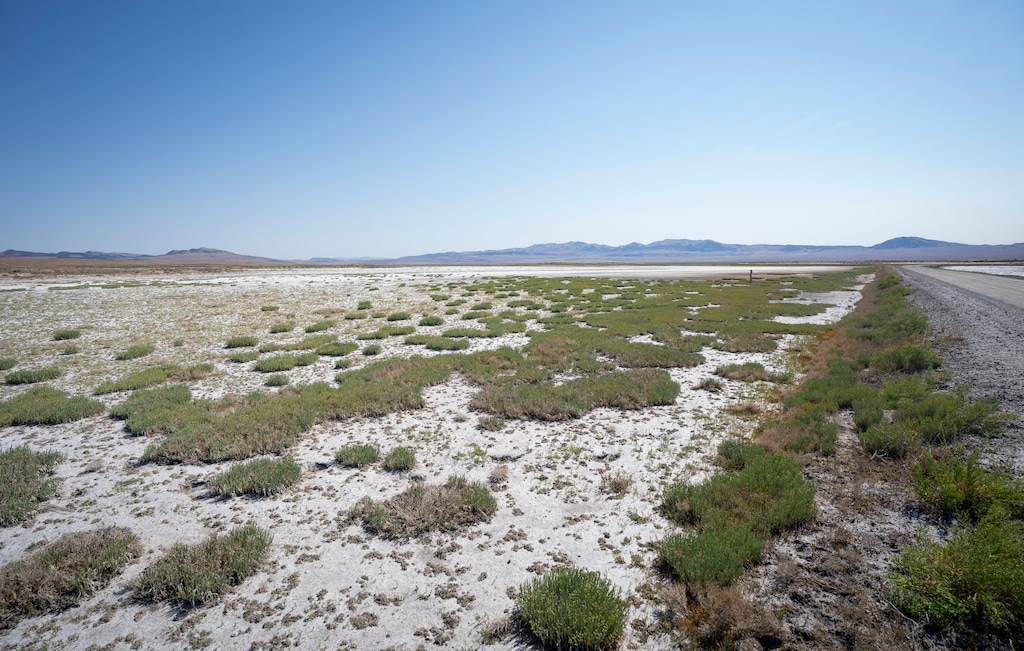
The decline of the Great Salt Lake threatens something even more personal: our health. The lake has shrunk and exposed more than 800 square miles of the lakebed — that’s roughly the size of Maui. The exposed lakebed contains toxic heavy metals such as arsenic, a carcinogen; mercury, a neurotoxin; and lead, which is dangerous even in small amounts. I find it unsettling that the lake’s decline affects the air we breathe. Northern Utah is prone to high winds, and when wind speeds exceed 25 miles per hour, toxic lake dust can be blown across the Wasatch Front, including Weber and Davis Counties. For me, Weber County isn’t just one of the areas at risk; it’s where I live and go to school.
The proposed Stratos Project in Box Elder County is exactly why these concerns matter to me. Backed by Kevin O’Leary, this massive project mostly made up of AI data centers could demand up to 9 gigawatts of power, compared with the entire state’s grid that currently uses about 4 gigawatts. Even though developers have said they plan to use water-efficient cooling systems, I still have concerns about how Utah’s electricity and limited water should be used, especially with a project of this size. I believe that those with the most wealth and influence should also have a greater responsibility to use their power for good and to protect the communities their decisions affect directly. Financial gain should never be the priority when the health of our environment is at risk and the entire state has to live with the consequences.
Recently, while I was in Salt Lake City, I noticed the perfectly green lawn of the State Capitol. I see lawns just as green in my own neighborhood. Our state is dry, and we are constantly reminded that we need to conserve water, so I think the places representing Utah should help set that example.
Organizations such as Grow the Flow and The Nature Conservancy are already showing Utahns how we can protect the Great Salt Lake, but conservation needs to be a responsibility we all share.
I believe that the more influence someone has to not only shape the future of Utah, but the world, the greater their responsibility should be to protect the things that matter most. The more love we have for something, the more we’ll want to protect it.
I am still growing up here, and my generation will live with the consequences of the choices being made today. But I hope we inherit more than just today’s problems; we should inherit proof that people cared enough to solve them.
(Leila Ropelato) Leila Ropelato is a sophomore at Saint Joseph Catholic High School in Ogden.
Leila Ropelato is a sophomore at Saint Joseph Catholic High School in Ogden. She is passionate about the future of her community and the world beyond it. She hopes to use her voice to bring attention to issues that matter and inspire others to help create a better future.
The Salt Lake Tribune is committed to creating a space where Utahns can share ideas, perspectives and solutions that move our state forward. We rely on your insight to do this. Find out how to share your opinion here, and email us at voices@sltrib.com.