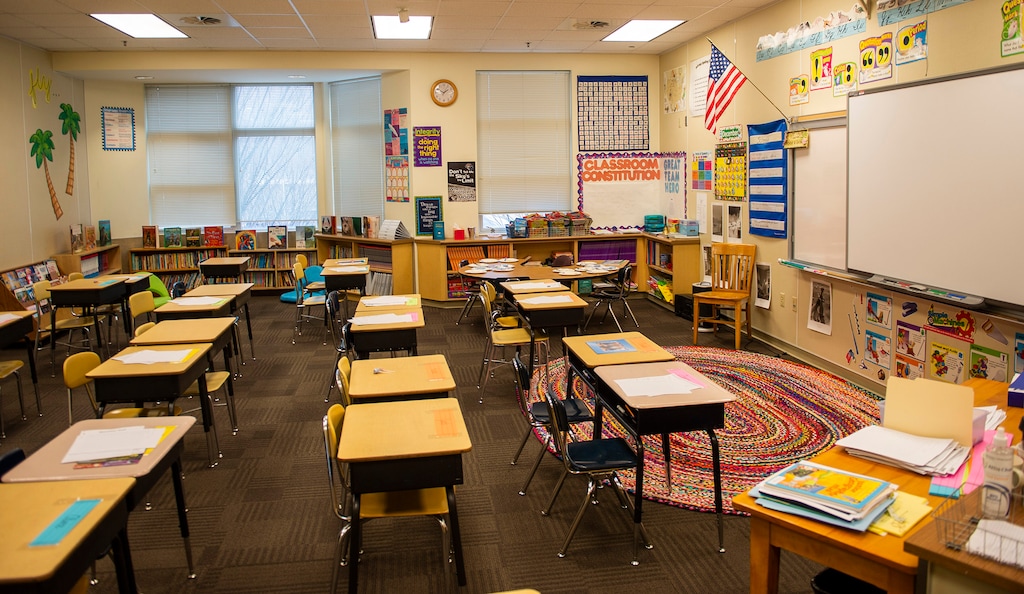
For 15 years, my high school classroom has been a vibrant gateway to the world. As an American Sign Language teacher, I’ve watched teenagers transform from hesitant beginners into compassionate communicators capable of bridging profound human divides.
When I first began teaching, the demand for language education in Utah was electric. My schedule was packed solid with seven full classes every day, filled to the brim with students eager to master a second language. Today, that vibrant corridor has quieted. My course load has dwindled from seven full classes to just three.
This dramatic collapse isn’t happening because Utah students suddenly lost interest in connecting with their neighbors or exploring new cultures. It is the direct, predictable outcome of a state educational policy that has quietly sidelined world languages — and in doing so, is squandering Utah’s greatest competitive edge.
To understand how we got here, look no further than the state’s high school graduation requirements and recent policy shifts. Utah rightfully prides itself on academic rigor, mandating four years of English and three years each of mathematics, science and social studies. Yet, to receive a standard high school diploma in Utah, the foreign language requirement is precisely zero credits.
For years, high school enrollment in world languages was kept afloat by the Utah Regents’ Scholarship, which wisely required students to complete two years of a world language alongside their core academics. But when state lawmakers replaced it with the Opportunity Scholarship, foreign languages were turned into an elective credit only. To qualify for state funding today, students must stack their schedules with Advanced Placement or Concurrent Enrollment courses strictly in math, science and language arts, though world language classes offer Concurrent Enrollment and Advanced Placement credit for upper levels.
Faced with a high-stakes choice, students rationally drop their language classes to chase scholarship dollars. Third- and fourth-year advanced language courses across our state are disappearing, and electives like ASL are being pushed to the margins.
This creates a glaring educational paradox. Many four-year institutions nationwide recommend foreign language proficiency. By failing to require a world language credit for high school graduation, Utah leaves thousands of students, particularly first-generation college-goers, unprepared for university admissions standards and forced into remedial catch-up courses.
Equally critical is what students lose when we strip language out of the curriculum: a fundamental lesson in cultural respect. Learning a language forces a student to step outside their own worldview. In ASL, for instance, students do not merely learn handshapes; they learn Deaf culture, history and etiquette. They learn that eye contact is respect, that spatial awareness is communication and that difference is not a deficiency. When young people wrestle with the grammar and customs of another culture, they develop deep humility, empathy and respect for communities unlike their own. In a world increasingly fractured by misunderstanding, language classrooms are one of the few places where respect for diversity is actively practiced every day.
This decline is even more baffling given Utah’s identity. Nearly 16% of Utah households speak a language other than English at home, encompassing more than 130 languages — from Spanish and Diné to Pacific Islander languages and ASL. Utah markets itself as the “Crossroads of the West,” attracting international tech, trade and tourism. Yet our graduation requirements treat language mastery as an optional luxury rather than an essential skill for an interconnected world.
Adding a foreign language credit requirement to Utah’s high school graduation standards — and restoring language incentives to state scholarships — isn’t about overburdening students. It’s about ensuring our graduates possess both the global competence and the cultural respect required to lead in the 21st century. It is time for state leaders to reinstate language requirements in our schools before the global superpower we built is lost for good.
(Kylie Howe) Kylie Howe is a Utah Teacher Fellow, high school instructional coach and teacher in Weber County.
Kylie Howe is a Utah Teacher Fellow, high school instructional coach and teacher in Weber County with 14 years of experience in elective and core classes.
The Salt Lake Tribune is committed to creating a space where Utahns can share ideas, perspectives and solutions that move our state forward. We rely on your insight to do this. Find out how to share your opinion here, and email us at voices@sltrib.com.