“The Emperor is a fan of Flock,” a man dressed as Darth Vader told a San Diego City Council meeting last month. Likening the A.I. surveillance vendor Flock Safety to the villainous galactic empire in “Star Wars,” he continued: “We must continue utilizing Flock technologies so that we can follow and surveil the rebel scum.”
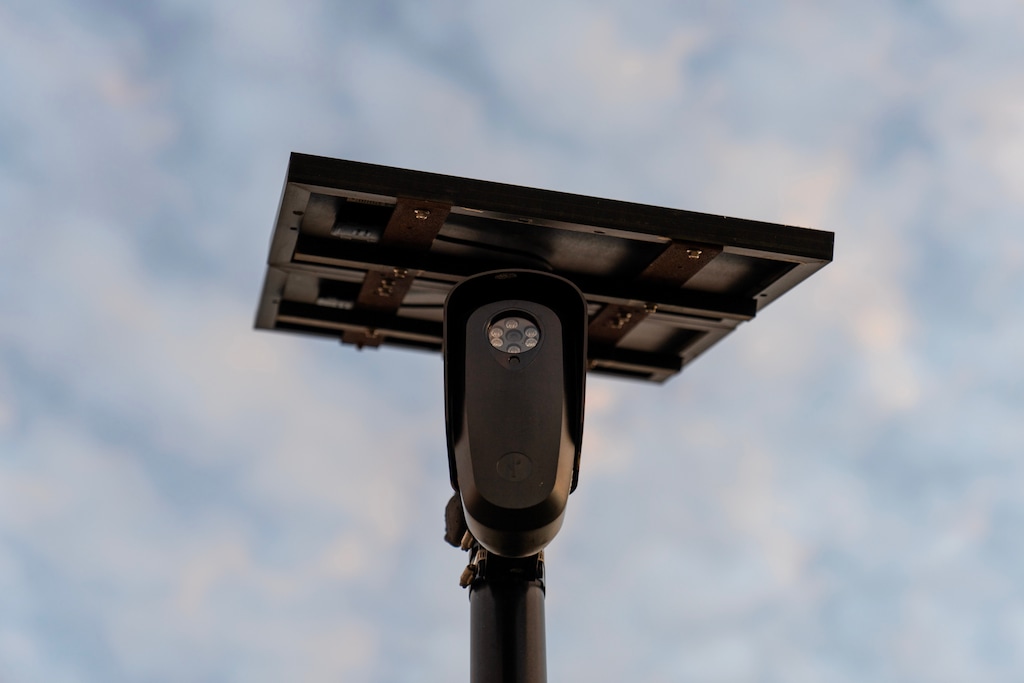
The same day that video went viral, the town of Hopkinton, Mass., joined more than a dozen neighboring municipalities in canceling their contract with Flock. There has been a flurry of reports about police officers around the country using the cameras for unauthorized purposes, such as to stalk their exes or romantic interests. To date, more than 350 cities and towns — in red, blue and purple states — have suspended or ended their contracts with Flock. The company has installed tens of thousands of license plate scanning cameras across the United States, marketing them to the police and private companies as a tool to track and identify vehicles to catch criminals. In some cases, people are so angry about Flock that they’re literally digging the cameras out of the ground.
For years, the prevailing narrative has been that privacy is dead and pervasive surveillance is just the cost of admission for existing in the digital age. The Flock backlash shows that people aren’t apathetic about their privacy. They may feel hopeless and helpless about it. They see a daily barrage of news stories about their data being exploited and abused, paired with corporate lobbying and chronic inaction by elected officials. But when people are shown a real way to claw back some power over the technology that affects their lives, they jump on it — demonstrating how grass-roots organizing can help us build a world where people control technology, not the other way around.
To the casual observer, it might seem like Flock cameras, and the backlash to them, sprung up overnight. But it’s really the product of years of organizing led by racial justice, immigrant rights and civil liberties organizations. Some of the first communities to cancel their contracts with Flock in the face of organized opposition were Austin, Texas, and Cambridge, Mass., where residents involved in immigrant rights and civil liberties worked together to put pressure on elected officials. Once a few towns canceled their contracts, the movement spread like wildfire. Ad hoc groups formed in dozens of cities and coordinated with one another on Zoom calls and in Signal chats, sharing tactics, research and talking points.
Then, against the backdrop of President Trump’s immigration crackdown in Minneapolis, news reports about federal immigration authorities using Flock’s license plate data poured gasoline on the blaze. (ICE does not have a contract with Flock but can make requests to local law enforcement for access to the cameras’ data.) When investigative journalists uncovered documents showing a Texas law enforcement officer had searched more than 83,000 cameras to track a woman who had a self-administered abortion, the issue reached a boiling point.
People who may have never attended a protest or participated in town government have become motivated to do something after learning more about these technologies. Teachers, cybersecurity experts, veterans and small-business owners came out of the woodwork to testify at hearings, file lawsuits, sign petitions and organize teach-ins.
DeFlock, a grass-roots network of activists, crowdsourced a map to track Flock camera locations. Immigrant worker advocates and shareholder groups zeroed in on Home Depot, a hot spot for ICE raids, which had installed Flock cameras in their parking lots, endangering immigrant day laborers. Feminist groups have targeted the cosmetic retailer Ulta for using the surveillance vendor. My organization, Fight for the Future, has led a coalition pressuring the home improvement retailer Lowe’s to end its contract.
The fight has been bipartisan. Representative Thomas Massie, Republican of Kentucky, introduced a bill into Congress to restrict the use of federal funding for Flock and other automated license plate readers. Elected officials from both parties have ordered an end to their use at the municipal level.
Though Flock’s A.I.-powered cameras have become synonymous with mass surveillance, the company actually isn’t all that special. The tech company Axon sells cameras that do pretty much the same thing in police departments. Palantir and Clearview AI build other A.I. surveillance products that also endanger to privacy and freedom.
Yet Flock cameras have become an especially enticing target for activists because they have given the mass surveillance state material form. They exist in the real world, like data centers, which have faced similar public backlash. Unlike the surveillance that happens in the cloud, these are cameras that can be identified and taken down.
More important, they’ve given people a way to channel their generalized anxiety about loss of privacy into concrete action that actually gets results. And in the process, they’re proving that democratic control over the technology that affects our lives is still possible.
Blocking a single data center won’t prevent A.I. from taking jobs or exacerbating inequality. Ending a Flock contract won’t stop high-tech surveillance. But this kind of community-level organizing is nevertheless showing it’s possible to challenge the rapid creep of technology that’s often forced upon us without our consent, even during a time of immense political gridlock. People do care about their privacy. They just need to be shown a viable path toward reclaiming it.
Everyone should study the movement against Flock. Take notes. These ordinary people from all walks of life are teaching us how to seize back control of our future.
Evan Greer is an activist, writer and musician based in Boston. She’s the director of the digital rights group Fight for the Future, which organizes against censorship and surveillance. This article originally appeared in The New York Times.