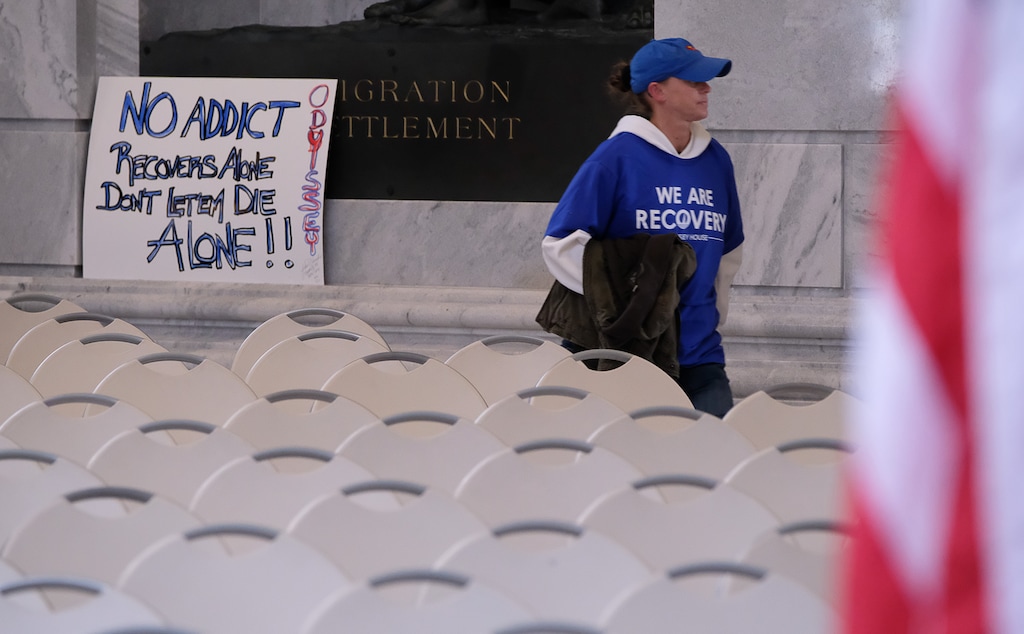
Twenty-two years. That’s how long alcohol controlled my life.
Not because I wanted it to. Not because I lacked morals or didn’t love my family. Addiction doesn’t work that way. It quietly convinces you that tomorrow will be different while stealing another piece of your life today.
Now, after years of struggling, I help others on their journeys toward sobriety. And I work to fight the stigma and judgment so many of us face.
For years, I was an expert at pretending everything was okay. I smiled when I was hurting. I laughed when I was falling apart. I made promises I genuinely wanted to keep, only to break them again. Every morning I told myself, “Today’s the day.” Every night I wondered why I couldn’t become the man I knew I was capable of being.
The hardest part wasn’t the drinking. The hardest part was believing that I was too far gone to change.
In 2021, I had lost everything. Everything I owned fit inside a backpack. I was homeless, sleeping behind dumpsters, in bushes and out in the desert because I wanted to be alone with my addiction. It was lonely, exhausting and I truly believed there was no way out.
Then, on Nov. 10, 2021, I finally admitted I couldn’t do it alone. I reached out for help, and that decision changed the course of my life.
I finally admitted that I couldn’t beat alcoholism on my own. Recovery began with surrender, asking for help and making the decision to keep showing up one day at a time. That decision changed the course of my life.
Recovery didn’t happen overnight. It happened one day at a time. One honest conversation. One meeting. One decision to keep showing up, even when it was hard.
Today, I have a life I never thought was possible. I volunteer in the recovery community by helping lead recovery meetings and walking alongside others as they begin their own journeys toward sobriety. It is one of the greatest privileges of my life to encourage people who are fighting the same battle I once fought.
Recovery has given me more than sobriety. It has given me purpose. It has taught me that our greatest struggles can become our greatest strengths when we’re willing to help someone else find hope.
That’s why I choose to share my story. Not because I’m proud of my past, but because I’m grateful for the life I’ve been given today.
While my addiction was alcohol, today’s addiction crisis has become even more dangerous. Fentanyl has changed everything. Families who once hoped for another chance are now planning funerals. Parents are losing children. Children are losing parents. Entire communities are grieving lives that ended far too soon.
Addiction doesn’t discriminate. It doesn’t care how old you are, where you come from, how much money you make or how much your family loves you.
But hope doesn’t discriminate, either.
Every week, I see fear. I see shame. I see people convinced they’ve gone too far. And then I see something incredible — I see people begin to believe in themselves again.
I see families healing.
I see trust being rebuilt.
I see lives transformed one day at a time.
Recovery doesn’t erase the past. It gives the past a purpose.
So, before you move on with your day, I’d like to ask you for one thing: Don’t see people struggling with addiction as lost causes.
See them as sons and daughters. Mothers and fathers. Friends, coworkers, neighbors and human beings who are fighting a battle that many will never fully understand.
If you love someone who’s struggling, don’t stop believing in them. Encourage them to seek help. Celebrate every step forward, no matter how small. Recovery is rarely a straight line, but every step toward healing matters.
And if you’re the one who’s struggling: Please don’t give up. Your worst day does not have to define the rest of your life. If my story reminds you that hope is still alive, then sharing it has been worth every word. Because every life is worth fighting for. Including yours.
Local groups like USARA, SwitchPoint, Hope Rising, Lions Gate Recovery or Steps Recovery Centers are available for support. Reach out.
(Christian Pelletier) Christian Pelletier is a Utah recovery advocate.
Christian Pelletier is a Utah recovery advocate who has been sober since Nov. 10, 2021, after struggling with alcoholism for 22 years. Today, he volunteers in the recovery community, helping lead meetings and encouraging others to discover that lasting recovery and hope are possible.
The Salt Lake Tribune is committed to creating a space where Utahns can share ideas, perspectives and solutions that move our state forward. We rely on your insight to do this. Find out how to share your opinion here, and email us at voices@sltrib.com.