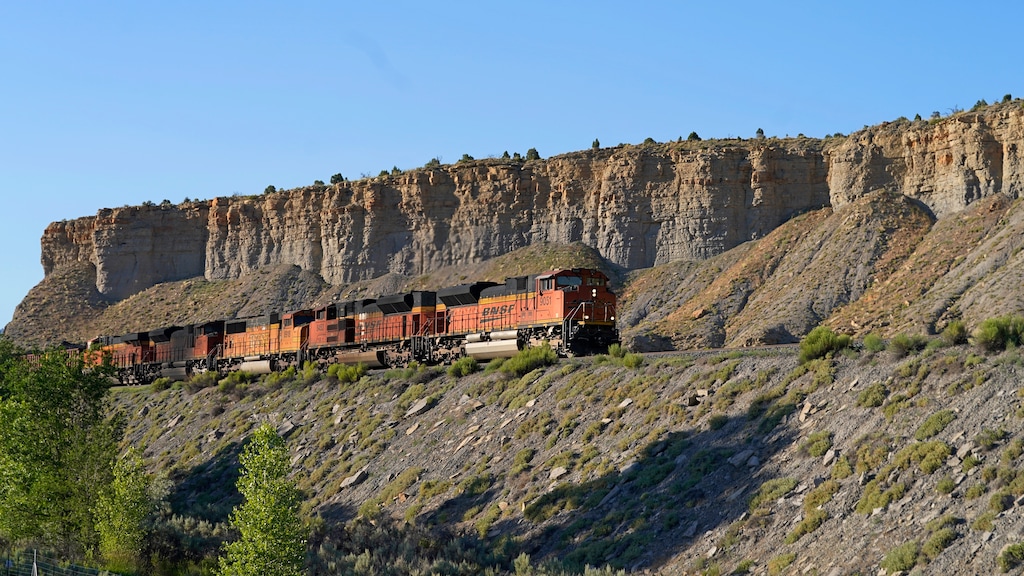
When a Utah family flips on the lights or fills up a grocery cart, they probably don’t think about freight rail. They should.
Here in Utah, freight rail operates over 1,300 miles of track, employs more than 1,100 Utahns, and plays an integral role in our energy industry. Just as importantly, it connects Utah manufacturers, producers and distributors to markets across North America, strengthening the logistics network that keeps our economy growing. From the Uinta Basin to the Wasatch Front, freight rail keeps energy flowing, goods moving and prices manageable for the families and businesses that call Utah home.
At the Utah Inland Port Authority, we see this every day. Our mission is to strengthen Utah’s logistics network so businesses can move goods more efficiently, attract investment and keep our state competitive. Freight rail is the backbone of that system. Moving the freight that travels through Utah by rail would require more than 3 million additional trucks. By expanding multi-modal freight options, Utah reduces congestion, lowers emissions, preserves our roads and ensures trucks are available for the critical first- and last-mile deliveries they do best.
As Utah continues to grow, preserving an efficient, multimodal freight network isn’t just good transportation policy — it’s an economic necessity.
That’s why the surface transportation bill now taking shape in Washington matters. The House Transportation and Infrastructure Committee has advanced its version. The decisions lawmakers make over the coming months will help determine whether freight rail remains positioned to deliver the reliability, affordability and innovation on which Utah’s economy depends.
Over the last decade, rail safety has continued to improve. According to the latest data from the Federal Railroad Administration, 2025 was the safest year on record for America’s freight railroads. The industry achieved this by investing billions of dollars in advanced inspection technology, monitoring systems, analytics and next-generation detection equipment as private-sector leaders identified opportunities to improve safety and strengthen railroad operations.
That record of progress is exactly why we hope Congress will proceed thoughtfully. Good policy will balance today’s realities with future needs and allow for innovation that could dramatically improve safety in the future.
Utah needs policies that reward results, encourage innovation and allow proven safety improvements to continue evolving.
Each year, Utah ships more than 3.3 million tons of coal and 3.8 million tons of chemicals to other states, along with crude oil from the Uinta Basin and countless other products that depend on efficient freight movement. Higher transportation costs ripple through the economy, affecting manufacturers, energy producers, farmers, retailers and, ultimately, consumers. When it costs more to move goods, the cost of those goods goes up, and Utah families feel it.
Fortunately, Utah has an influential voice in this debate. Our congressional delegation has emphasized that results matter and that innovation and consensus produce better policy.
Those principles fit this debate well. Congress has an opportunity to build on freight rail’s strong safety record while taking a thoughtful approach to new requirements and avoiding mandates that add costs without delivering meaningful safety benefits.
Utah’s businesses, energy producers and families depend on a freight network that is safe, efficient and prepared for the future. As our state continues to grow — and as the Utah Inland Port Authority works to expand rail access, strengthen supply chains and attract new investment — that competitive advantage will only become more important.
Congress should craft a transportation bill that encourages continued investment and innovation, strengthens Utah’s logistics advantage, and keeps goods moving safely and affordably for decades to come.
(Ben Hart) Ben Hart is Executive Director of the Utah Inland Port Authority.
Ben Hart is executive director of the Utah Inland Port Authority.
The Salt Lake Tribune is committed to creating a space where Utahns can share ideas, perspectives and solutions that move our state forward. We rely on your insight to do this. Find out how to share your opinion here, and email us at voices@sltrib.com.