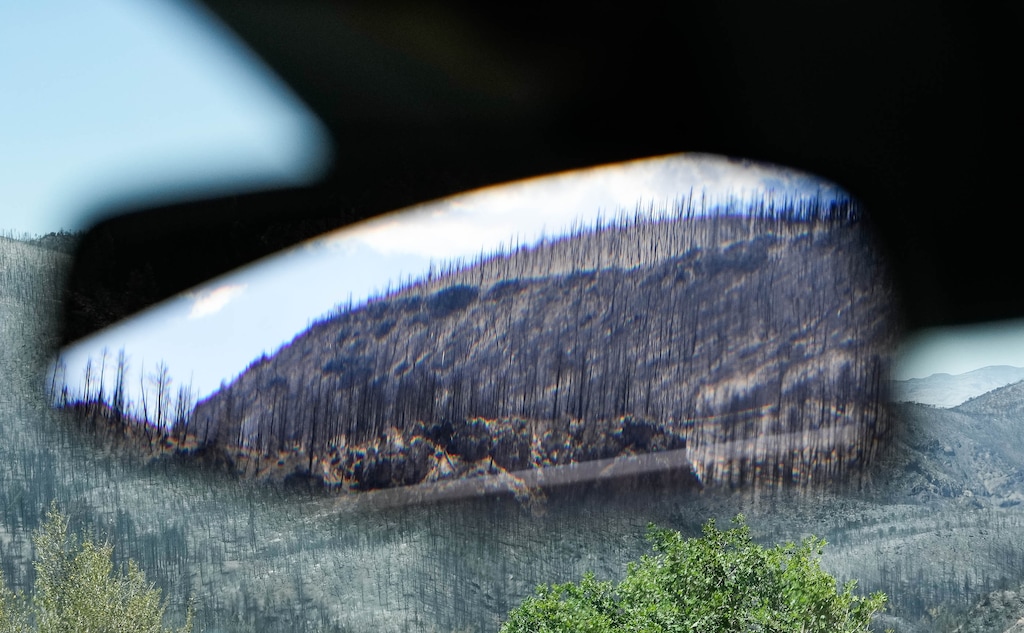
Extreme drought, heat and wind are fueling a new generation of fast-moving, high-intensity wildfires. Utah has already seen examples this summer with the Iron and Cottonwood fires.
These “fast fires” leave far less time to protect lives and property, especially when they ignite near communities. Although first-responders can usually evacuate residents safely, a growing number of fires are moving faster than emergency systems can keep pace.
The 2021 Marshall Fire in Colorado, the 2023 Lahaina Fire on Maui and the 2025 Palisades and Eaton fires in Los Angeles all demonstrated how quickly catastrophic wildfires can overwhelm even well-prepared communities. Similar events have occurred worldwide, reflecting a troubling trend toward larger, faster fires that leave less time to respond.
I’ve studied wildfire response for 30 years beginning with my graduate research at the University of California Santa Barbara, and the frequency and urgency of recent wildfire evacuations is alarming.
Extreme fire behavior is also blurring traditional assumptions about who is at risk. Wind-driven fires can begin in grasslands, shrublands or forests before spreading into suburban neighborhoods where structures ignite neighboring structures. Predicting when these fires will occur has also become more difficult. Both the Marshall Fire and the Los Angeles Fires erupted during what is normally the winter wet season, destroying thousands of homes. The lesson here is that many more communities need to be prepared to evacuate quickly, year-round.
Fortunately, these events are not entirely unpredictable. Emergency managers routinely combine drought conditions, fuel moisture and weather forecasts to issue Red Flag Warnings or alerts for life-threatening wind events, giving residents an opportunity to prepare before disaster strikes.
Fast-moving fires compress every step of an evacuation. Officials must quickly determine who should evacuate, when to issue warnings and which routes remain safe. At the same time, households must receive the warning, recognize the danger, gather essential belongings and leave before conditions deteriorate. Any breakdown in this sequence — whether warning system failures, delayed departures, traffic congestion, blocked roads or mobility challenges — can lead to dire circumstances. The goal of preparedness is to reduce the time it takes everyone to reach safety while developing backup plans for when things go awry.
Emergency officials carry enormous responsibility for issuing timely, accurate evacuation orders. Early warnings save lives. Their preparation includes testing warning systems, developing evacuation maps, crafting clear messages and training for rescue operations. Today, many communities are expanding the use of geo-targeted Wireless Emergency Alerts (WEAs), multilingual messaging and local emergency notification systems. If you have not already signed up for your community’s alert system, this is one of the simplest ways to improve your chances of receiving timely information — and it also makes your local emergency manager’s day a little easier.
For households, one of the most important questions is what to take. The familiar “go bag” has become the symbol of evacuation preparedness because some of the longest delays occur while people scramble to gather pets, medications, important documents, treasured possessions and family members. Fortunately, many photos now live in the cloud, although irreplaceable family photographs and heirlooms may still be worth bringing if time allows. Cell phones, chargers, laptops and essential medications should be near the top of every list. Whether the Xbox, Kindle or Nintendo Switch makes the cut depends on how much time you have.
Another question deserves more attention: Who in your neighborhood might need help evacuating? Utah has a long history of neighbors helping neighbors during disasters, dating back at least to the 1983 Salt Lake City floods. More recently, residents rescued neighbors in the Roy wildfire on July 20th that they knew couldn’t evacuate on their own. Colorado’s governor Jared Polis described the Marshall Fire evacuation as “miraculous.” That success reflected not only the efforts of roughly 300 first responders going door-to-door, but also residents who checked on neighbors, shared rides, helped evacuate pets and looked after vulnerable family members. Sometimes helping is as simple as sending a text message or making a phone call. Other times it means offering transportation or shelter. Some of the most celebrated examples of disaster response — the tugboat flotilla after 9/11 and the volunteer “Cajun Navy” during Hurricane Harvey in Houston in 2017 — were improvised acts of ordinary people helping one another. Communities become more resilient when these connections are built before disaster strikes.
It’s possible that monsoonal moisture — and perhaps even a Godzilla-strength El Niño — will reduce wildfire danger through the rest of the summer and into the fall. In the meantime, take a few minutes to imagine how quickly your household could leave if a fast-moving wildfire threatened your neighborhood. Then ask: Who else might need your help getting out safely?
(Tom Cova) Tom Cova is a professor in the University of Utah’s School of Environment, Society & Sustainability.
Tom Cova is a professor in the University of Utah’s School of Environment, Society & Sustainability. The views expressed are his own and do not necessarily reflect the position of the University.
The Salt Lake Tribune is committed to creating a space where Utahns can share ideas, perspectives and solutions that move our state forward. We rely on your insight to do this. Find out how to share your opinion here, and email us at voices@sltrib.com.