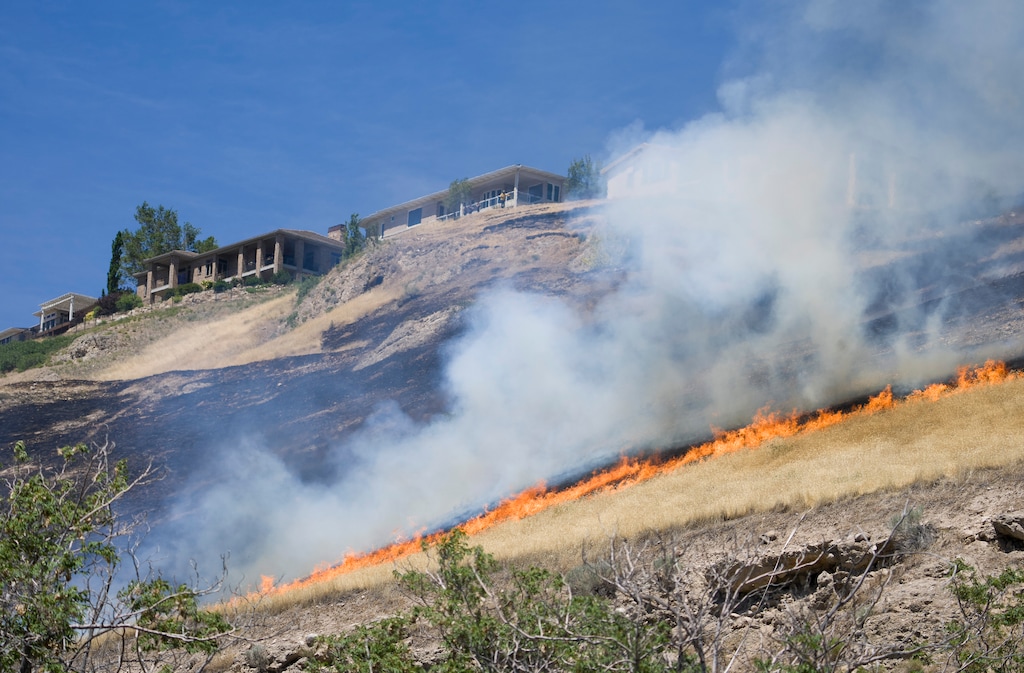
The first thing I noticed wasn’t the smoke, it was the silence. Three wildfires burned within minutes of my home near the State Capitol within just a couple of weeks this summer.
We can’t stop every spark, but we can build a Utah that’s harder to burn. And that starts by restoring native plants, reducing cheatgrass before it fuels the next fire and rethinking how we use the water Utah receives.
Wildfire prevention shouldn’t begin when smoke appears. It should begin years earlier by restoring our landscapes.
Like everyone else, I’ve been refreshing the news constantly. Every fire seems to bring the same question: Was it an abandoned campfire? Fireworks? Faulty equipment? Human carelessness?
These questions are important, but I find myself asking a different one: Why have our landscapes become so vulnerable that a single spark can become a major wildfire?
Ironically, it wasn’t the fires that sent me searching for answers. It was my love of birds.
I moved back to my hometown of Salt Lake City after spending years away. Coming home pulled me out of a creative block I had been in for years. My dad and I started birding together, and through that hobby I learned something I’d never fully realized growing up here. Millions of migratory birds depend on the Great Salt Lake every year. That realization completely changed the way I saw my home. I no longer saw our foothills as beautiful backdrops. I started seeing them as a living community. I stopped seeing the Great Salt Lake as the landmark our city is named after and instead saw it as part of a living system so many species rely on.
I turned our yard into a sanctuary for birds and other wildlife by planting native vegetation, filling feeders and creating birdbaths. Before long, Lazuli Buntings, hummingbirds, Western Tanagers and Bullock’s Orioles started visiting. When the fires came, I couldn’t stop wondering what had happened to them.
I returned home one night after photographing a fire that was still burning and started researching. I kept thinking about Red Butte, where I walked my dogs, attended my first concert and made some of my favorite childhood memories. Suddenly it felt fragile.
I read research from Oregon State University about cheatgrass, an invasive grass that dries earlier than many native plants, turning entire hillsides into fuel. After a fire, it often returns even more aggressively, creating a cycle that’s difficult to break without restoring native vegetation. The more I learned about cheatgrass, the Great Salt Lake, stormwater and wildfire, the more I realized none of these subjects exist in isolation. They’re deeply interconnected.
I stumbled across the work of Brad Lancaster in Tucson, Arizona. His idea was beautifully simple: Slow rainwater down, spread it out and let it soak into the soil where it’s needed. His neighborhood redirected stormwater into native vegetation through rain gardens and small basins, eventually influencing city policy because it worked.
Utah isn’t Tucson. Our climate and ecosystems are different. But the lesson stayed with me: Healthy landscapes can be restored and cared for. When we get rain, we watch water rush down our streets and disappear while our foothills grow drier. What if restoring native plants became just as important as fighting fires? What if guiding rainwater became part of wildfire prevention? What if neighborhoods partnered with conservation specialists to restore habitats one hillside at a time?
I’m not a wildlife expert or an ecologist. I’m just a girl who accidentally fell in love with birding. Birding taught me that nature doesn’t divide itself into categories the way we do. Birds depend on habitat, habitat depends on healthy soil, and healthy soil depends on water. Whether we realize it or not, so do we.
Wildfire is often spoken about as if it begins with a spark, but maybe it begins years earlier with a landscape we’ve slowly stopped paying attention to.
Another lesson I’ve learned has nothing to do with ecology — it has to do with preparedness. During the Ensign Peak fire, my neighbors and I stood outside asking whether anyone had received an alert. None of us had. Wildfires are unpredictable, and conditions can change quickly. Residents living near an active wildfire should receive clear, location-based notifications, not to create panic, but to give people time to prepare if circumstances change.
The more I learned, the more I realized this isn’t really a story about wildfire. It’s a story about paying attention. Paying attention to birds led me to the Great Salt Lake, native plants, cheatgrass, restoration and, ultimately, hope.
Hope isn’t believing someone else will solve these problems for us. It’s believing that together, we can. Perhaps resilience doesn’t begin after disaster strikes. Maybe it begins the moment we stop asking what started the last fire and start imagining how we can help our landscapes heal.
(Rachel Judd) Rachel Judd is a Utah-born artist and writer.
Rachel Judd is a Utah-born artist and writer whose passion for conservation deepened through birding. She writes about community resilience, wildlife and the connections between people and the landscapes they call home.
The Salt Lake Tribune is committed to creating a space where Utahns can share ideas, perspectives and solutions that move our state forward. We rely on your insight to do this. Find out how to share your opinion here, and email us at voices@sltrib.com.