There’s a macabre parlor game obsessing many Democrats. Because they assume that President Trump will be unconstrained by law, ethics, tradition and precedent in trying to preserve the Republican majorities in Congress, they’re asking what’s the worst he can do to fix this year’s midterm elections. No idea, no matter how far-fetched, is off limits.
The tepid response to President Trump’s address this month about election vulnerabilities showed that he’s had only mixed success in his campaign so far. He’s failed to persuade the Senate to pass the SAVE America Act, which would impose onerous new rules for proof of citizenship on voters, and a federal judge has put on hold his directive to the Postal Service to limit delivery of mail-in ballots in states that refuse to share voter data with the federal government.
But the very fact that Mr. Trump decided to give a high-profile speech underlined his obsessive interest in the subject. And he continues to use the many other tools at his disposal to further this aim, including threatening to withhold federal funding from states that refuse to follow his directives on voting and neutralizing the bipartisan agency devoted to helping administer fair elections.
What else could President Trump do?
That’s just about the only thing Representative Joe Morelle thinks about these days. Mr. Morelle has represented a district in upstate New York since 2018, and he serves as the ranking member on the House Administration Committee, which supervises federal elections and oversight of House officers and operates unofficially as a kind of nerd caucus for those members who aspire to mastery of the House’s arcane rules and traditions.
“The president simply can’t get over 2020, and he’s reliving it every day. I feel like it’s the girlfriend in high school that got away,” Mr. Morelle told me. “Instead of accepting the fact that he lost an election — God forbid, which almost everybody does if you’re in this business long enough — he just attacks the system.” Mr. Morelle has been traveling the country — Los Angeles, San Francisco, Dallas, with more on the horizon — holding hearings about the risks to the vote, in particular for this year’s midterms.
While most of the attention so far has focused on who gets to register and vote, Mr. Morelle has also been noodling about what happens after the votes are cast on Nov. 3.
The process for installing a new House of Representatives begins when the states certify the results in each of the 435 races. The rules vary by state, but most require election officials to certify by late November or early December.
In recent years, Trump-aligned local officials have frequently used false claims of fraud or noncitizens voting as justification to decline to certify election results. Since 2020, more than 30 local officials in Arizona, Colorado, Georgia, Michigan, New Mexico, North Carolina and Pennsylvania have refused to certify election results, many in hopes of forestalling Democratic victories.
If there are similar delays and refusals after Nov. 3 — and there probably will be — Mr. Morelle has a simple answer: sue. In past years, Democrats have had success in winning court rulings that force local officials to certify results, and they’ll probably win these kinds of cases again — albeit with the usual delays and uncertainty that always accompany litigation.
Democrats have reason to believe that they can win the House in the midterms. But the path to achieving that victory hinges on a technical detail. Federal law assigns the clerk of the House, the chamber’s chief legislative administrator, the job of assembling the “roll” of new members to be sworn in on Jan. 3, 2027.
The current clerk is Kevin McCumber, who was chosen for the job by Kevin McCarthy, then the speaker, in 2023. But Mr. McCumber had previously served in the clerk’s office under Speaker Nancy Pelosi, and he is generally regarded as a nonpartisan. In past years, the clerk’s task has been uncontroversial, even unnoticed, as he or she has simply copied the names of the winners onto the roll. (Mr. McCumber declined to comment.)
Still, as the Democrats’ quasi-official election Cassandra, Mr. Morelle has been conducting a thought experiment: What if Mr. McCumber isn’t in his job long enough to produce the roll?
One disaster scenario, according to Mr. Morelle, would be this: After results show the Democrats winning a majority in the House, the president declares that the election is full of fraud and the winners don’t need to be certified. Mr. Trump could then demand that Speaker Mike Johnson fire Mr. McCumber, which Mr. Johnson has the legal right to do.
Under the procedures of the House, the speaker can install a more compliant successor — that is, a G.O.P. toady. In this scenario, Speaker Johnson’s designee, at Mr. Trump’s instigation, would produce a roll of new House members that included Republicans in races that Democrats believed they had won.
While the speaker does have the unilateral power to remove the clerk, his choice for a permanent replacement would have to be approved by a vote of House members. Mr. Morelle said that in that case, Speaker Johnson might not be able to persuade his slim Republican majority to replace Mr. McCumber. “You’d have a number of members who are retiring, who I think would no longer be beholden to Johnson or the president, who I think would take a very, very dim view of efforts to overturn the election,” Mr. Morelle said.
Compounding the complexity, Mr. McCumber (or whoever replaced him) would be in a race against time, because of a key difference between the Senate and the House. The Senate is what’s known as a continuing body, which operates seamlessly from one year to the next. But the House of Representatives ceases to exist at noon on Jan. 3 following each election. After that moment, none of its 435 members remain in office unless and until they are sworn in again.
This is why any delay tactics, like those conceived by President Trump’s lawyers in the 2020 election, could have a particularly bad outcome for the House.
Only some employees of the House have a job that carries over from one term to the next — one of those is the clerk. In normal circumstances, on Jan. 3, the clerk goes to the House chamber with the roll of newly elected representatives. Even though the people on that roll are not yet official members of Congress, the task of electing a new speaker of the House is theirs. The winner of the race for speaker then swears in the rest of the members of the House, and then they can begin conducting legislative business.
But what if by Jan. 3, the House has not yet approved a replacement for the clerk? Which newly elected members get to cast that first vote for speaker?
“No one knows what would happen,” Brian Kalt, a law professor at Michigan State and an authority on House procedures, told me. “You could have votes on who gets to vote. That would be a huge mess. It would get very ugly.”
At this point, certainly, there would be multiple lawsuits asking the courts to sort it out. But historically, federal judges, including those on the Supreme Court, have been reluctant to make rulings about the internal operations of the other branches of government. “The courts have what’s called the political question doctrine, which generally means it’s up to the House to solve its own problems,” Professor Kalt said.
Mr. Morelle plans to keep things as simple as possible: Get the certificates in hand from the states and press his colleagues in both parties to abide by those results. Once the certificate of election is forthcoming to the clerk, the clerk is bound under law and under the courts to put those people in the roll, he told me.
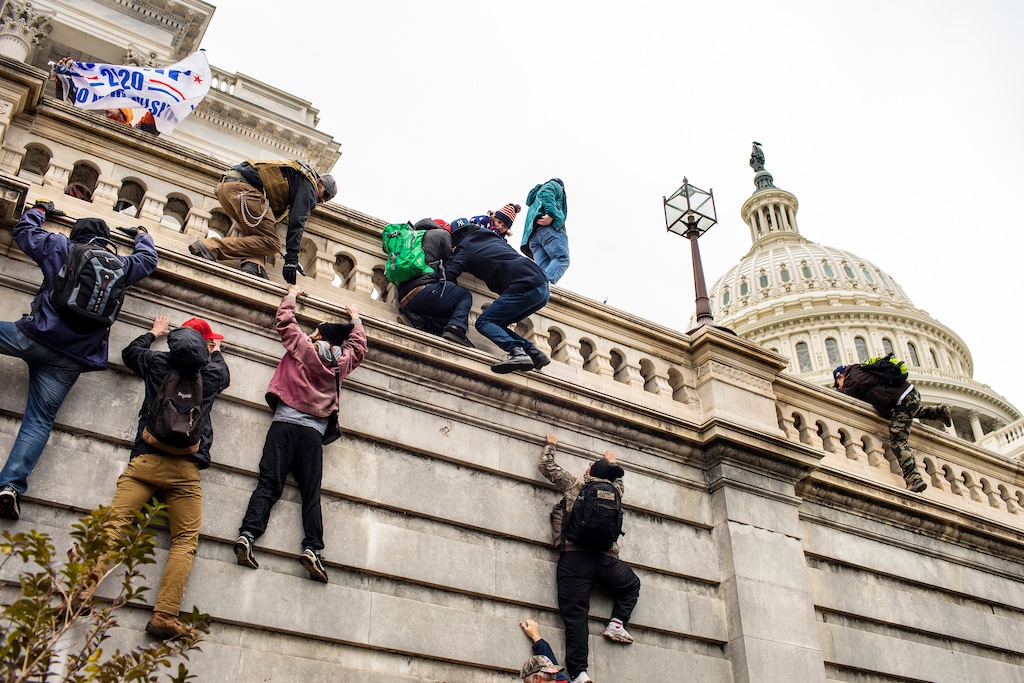
This approach resembles the one that finally brought the presidential election of 2020 to a conclusion. On Jan. 6, 2021, President Trump and his allies suggested all kinds of wrongdoing (never proved to this day) that supposedly required suspending, or overturning, the acceptance of the states’ electoral votes in the Senate. But the Senate, led by Vice President Pence, who was its presiding officer at that moment, opted for what members of Congress refer to as regular order. He accepted each state’s certification of its results. Mr. Morelle is hoping the full House will do the same in 2027.
For all his concerns, Mr. Morelle is cautiously optimistic about the outcome of any controversy. “The American people, I think, are not going to just sit by while an election which has given a Democratic majority of the House is taken away by some subterfuge that involves a removal of the sitting clerk and an acting clerk put in his place, who happens to be an election denier,” he said.
But he’s taking no chances, explaining, “I still look both ways when I cross what I think is a deserted street.”
Jeffrey Toobin is a former assistant U.S. attorney who writes about the intersection of law and politics. He is the author of “The Nine: Inside the Secret World of the Supreme Court,” “The Pardon: The Politics of Presidential Mercy” and other books. This article originally appeared in The New York Times.