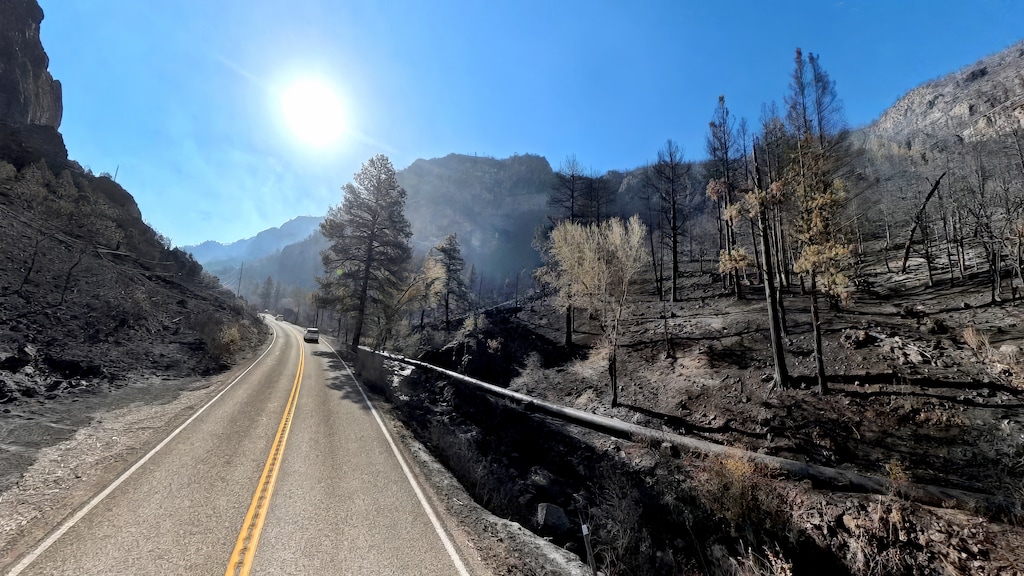
It has been a summer of fires in Utah. Flames have tragically consumed structures, killed firefighters and played a role in flooding.
The Forest Service’s primary approaches to reducing the effects of fires are timber harvest, thinning of forests and prescribed fire. Research has shown these management actions can reduce fire intensity and provide firefighters with a greater margin of safety. The implementation of these forest management treatments, however, does not ensure fires are avoided.
The Cottonwood Fire burnt nearly 100,000 acres east of the city of Beaver despite multiple recent Forest Service decisions implementing thousands of acres of treatments to reduce fire risk and produce timber in that area. As part of this effort, the Forest Service collaborated with Utah’s Watershed Restoration Initiative and spent millions of dollars between 2021 and 2026 to reduce the risk of fire and protect streams. Yet the area burned and flooded.
I spent 30 years working at all levels of the Forest Service. During that time, I observed the agency doing what it knows best: large scale vegetation treatments to limit fires and commercial timber harvest. What they often overlooked was seeking and responding to public input, protecting infrastructure and implementing projects in a more timely manner.
One decision in the burned area was the Big Flat Vegetation Project Environmental Assessment completed in 2016, well before the Cottonwood Fire. Its goal included “reducing fire behavior in and around the 2,300 acres of private property at the Eagle Point Ski Resort.” This assessment went on to describe treatment of vegetation downslope of the resort, “because stand-alone hazardous fuels treatments are both expensive and time consuming, the proposed treatments will not occur over the entire stand.”
As many of the structures in the Eagle Point Resort were burned in the Cottonwood Fire, my guess is the landowners would have disagreed that these acres were too expensive to treat.
The best chances of protecting private lands and structures from wildland fires are heavy handed vegetation and timber treatments. One approach is the use of shaded fuel breaks, which would remove all but a few large widely spaced trees from a 150- to 300-foot-wide strip of public land along its border with private land. It is impossible to know if removing most of the forest vegetation near the private land boundary would have saved structures from this fire or been tolerated by the landowners, but it appears such an alternative was never evaluated.
The Forest Service did what was legally required. The issue was these assessments never discussed the possibility of a future conflagration across private land or the types of treatments that might have altered that kind of fire’s behavior. Instead, these documents focused on discussing timber harvest away from the private land boundary, maintaining vegetation diversity and restoring the historic fire regime.
Landowners who build houses in forested areas assume a greater risk of their properties being destroyed by fire. That does not negate the Forest Service’s responsibility to design alternatives that might mitigate some of the fire risks as they are the agency with expertise.
The Forest Service seems focused on meeting targets measured in acres treated. The question that needs to be answered is whether the status quo is the right approach, or whether the Forest Service should also be working with the local public to design vegetation projects that are more likely to stop the progress of fires near human habitation, even if such treatments are costly.
(Brett Roper) Brett Roper is a retired Forest Service employee and a retired adjunct professor at Utah State University. He lives in Logan.
Brett Roper is a retired Forest Service employee and a retired adjunct professor at Utah State University. He lives in Logan.
The Salt Lake Tribune is committed to creating a space where Utahns can share ideas, perspectives and solutions that move our state forward. We rely on your insight to do this. Find out how to share your opinion here, and email us at voices@sltrib.com.