 Emily R. Anderson
 Jessica Schreifels
On the morning of June 3, Damon Seei was overwhelmed. The Utah County postal employee was covering a co-worker’s route in Eagle Mountain, according to federal prosecutors, and was responsible for delivering mail to at least 300 people. In the stack were their election ballots.
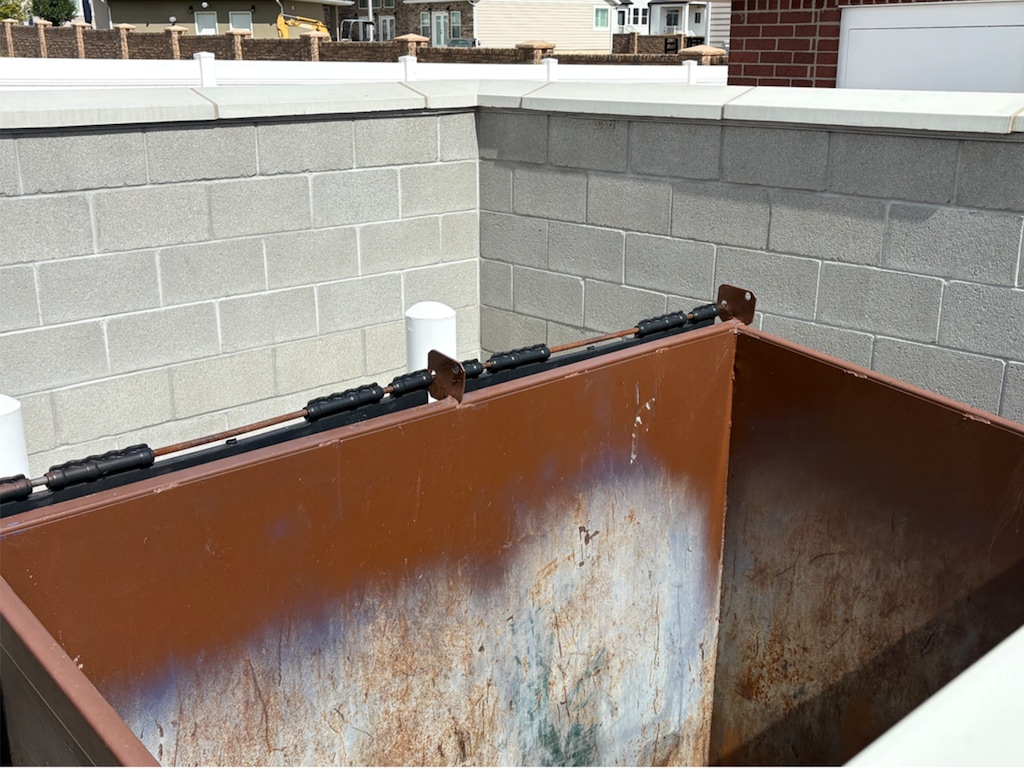
Seei began his route around 10:30 a.m. Just before noon, he parked his mail truck beside a dumpster in a church parking lot and stayed for three minutes, prosecutors wrote in a court filing. That’s when they say he threw away a pile of mail — including the ballots in their identical envelopes.
(U.S. District Court) According to federal prosecutors, this photo shows the area surrounding a dumpster at an Eagle Mountain church where a postal worker allegedly threw away approximately 300 ballots for voters to use in the June 23, 2026, primary election.
He thought he was tossing advertisements, Seei later told investigators, and he wasn’t motivated by politics. The load of mail felt “heavier” than usual and he felt “overwhelmed” by the amount he had to deliver, he said, and he wanted to finish his shift early.
Simply put, in his words: he acted out of “frustration” and “laziness.”
Federal prosecutors don’t buy that explanation.
Seei also admitted that he had separated out the ballots and set them aside at the beginning of his shift, prosecutors argued in a recent court filing, before he threw away a combined stack of mail away 90 minutes into his shift.
It doesn’t seem “plausible” that he didn’t notice the ballots, they wrote, and “the evidence does not suggest that Seei made any effort at all to deliver the approximately 300 mail-in ballots.”
(U.S. District Court) Federal prosecutors included this image of a sample ballot for Utah's June 23, 2026, primary election in filings related to a criminal charge filed against a former postal worker. The man is accused of putting approximately 300 ballots in a Utah County church dumpster.
A federal grand jury indicted Seei last week on a felony charge that carries a potential penalty of a fine and up to five years in prison, if he’s convicted. He pleaded not guilty to the count of unlawfully hiding, destroying or delaying mail during his first court appearance on Tuesday.
‘We were disenfranchised’
Nikki Jepson first realized she hadn’t received her ballot three days after Seei allegedly trashed that pile of mail.
Some of Jepson’s family had left her Eagle Mountain home after celebrating her 50th birthday, and she was watching the news on TV.
“I’m like, ‘Wait a second. It’s the primary election,’” Jepson recounted. She said she hadn’t realized it was time to vote because a ballot never arrived in her mailbox.
After that day, she said, she kept hearing from her neighbors that they also didn’t get theirs. “And I was just like, ‘What the heck happened?’” she recalled.
A couple dozen people, all living in the same area as Jepson, reached out to Utah County Clerk Aaron Davidson about their missing ballots in the following weeks, he told county commissioners in July when they met to certify election results.
Davidson consulted with the Utah County Attorney’s Office, and sent emails to the nearly 12,000 voters living in the state House district where voters reported missing ballots: “Could you please reply to this email with a simple ‘yes’ or ‘no’ to let us know whether you received your ballot in the mail?”
“No,” read hundreds of responses, according to Davidson. Court documents say Davidson tallied 304 voters who did not get their mail ballot.
Davidson told The Salt Lake Tribune in July that he referred the matter to the U.S. Postal Service’s Office of the Inspector General. The office’s agents investigated alongside agents with the Department of Homeland Security.
Postal records confirmed that Seei was covering the Eagle Mountain route where the missing ballots were supposed to be delivered, prosecutors wrote.
Investigators never found the discarded ballots, according to U.S. Attorney for Utah Melissa Holyoak. A Homeland Security leader would not elaborate on investigative details during a Tuesday news conference.
Eagle Mountain’s turnout in the June primary election fell drastically below the rest of Utah County. Just 13.1% of active, registered voters there cast a ballot — less than half of the countywide percentage of 27%. The state’s overall turnout was 37.2%.
“We were disenfranchised,” Jepson said. “We were not given the opportunity to vote because somebody decided to dump a bunch of ballots in the garbage can.”
The U.S. Attorney’s Office for Utah said it plans to reach out to each of the alleged victims — the residents who didn’t get ballots — and notify them about the case.
Not a ‘very political person’
Seei doesn’t appear to be politically active, public records indicate.
He first registered to vote in 2020, when he was 28 years old, but opted not to be affiliated with a political party. Seei cast his first ballot that November — it was a presidential election year.
He registered to vote again in 2025, and again did not select a political party. Seei has not voted in the last six years. That’s what he told investigators, the court filing said.
“He claimed not to be a ‘very political person,’” prosecutors wrote. “He claimed not to have a ‘political agenda’ and that he did not intend to ‘disrupt any political process’ by discarding the mail.”
Seei no longer works for the U.S. Postal Service, court documents said.
He has no criminal history, but prosecutors argued in court papers that if a judge released him without guardrails, he would “remain a danger to the integrity of the electoral system.”
“Given that a national election will take place on November 3, 2026 — less than seven weeks from now — the Court should impose conditions of release to prevent Mr. Seei from interfering with the delivery of any more mail-in ballots,” they wrote.
The federal public defender assigned to represent Seei, Justin Knell, did not respond to questions about the prosecutors’ assessment.
Seei is not being held in jail, according to court records, and a judge did not set any clear election-related release conditions in his order. Seei was directed to come to his court hearings, keep in touch with a pretrial officer and keep a job. He’s also not allowed to apply for a passport.
Announcing the charges in Washington on Tuesday, over 2,000 miles from the Salt Lake City courtroom where Seei appeared that morning, acting Deputy Attorney General Trent McCotter said Seei’s alleged actions show that “voting fraud is real.”
He tied the case to a political fight the Justice Department is leading, supporting the Postal Service’s proposal for mail-in ballot envelopes to carry a unique barcode and be tracked through the process, start to finish, with each ballot compared against a list of eligible voters provided by Homeland Security.
McCotter said this rule would address “the chronically abused mail-in ballot system” and ensure ballots “end up in the hands of those who are entitled to them” — but critics have argued it would have ultimately limited voting access.
Ultimately, a federal district court in Massachusetts blocked the rule, which President Donald Trump had ordered the Postal Service to draft. The U.S. Supreme Court decided not to interfere, leaving it on hold.
Utah’s elections chief Lt. Gov. Deidre Henderson, a Republican, praised the DOJ for pursuing charges against Seei, but disputed McCotter’s assertion that the rule would have changed the outcome for Eagle Mountain voters.
“To be clear,” Henderson wrote Wednesday on social media, “the dreadful USPS rule would not have stopped a bad postal worker from chucking a bag of ballots into the dumpster. It would, however, have prevented many other eligible voters from receiving their ballots in the mail.”
Jepson, the Eagle Mountain voter, said she still plans to vote by mail in the November general election. Seei’s alleged actions, she said, aren’t a reflection of the way that Utah conducts its elections.
“That’s just the bottom line,” she said. “Sometimes bad actors are going to be bad actors.”