 Robert Gehrke
 Emily R. Anderson
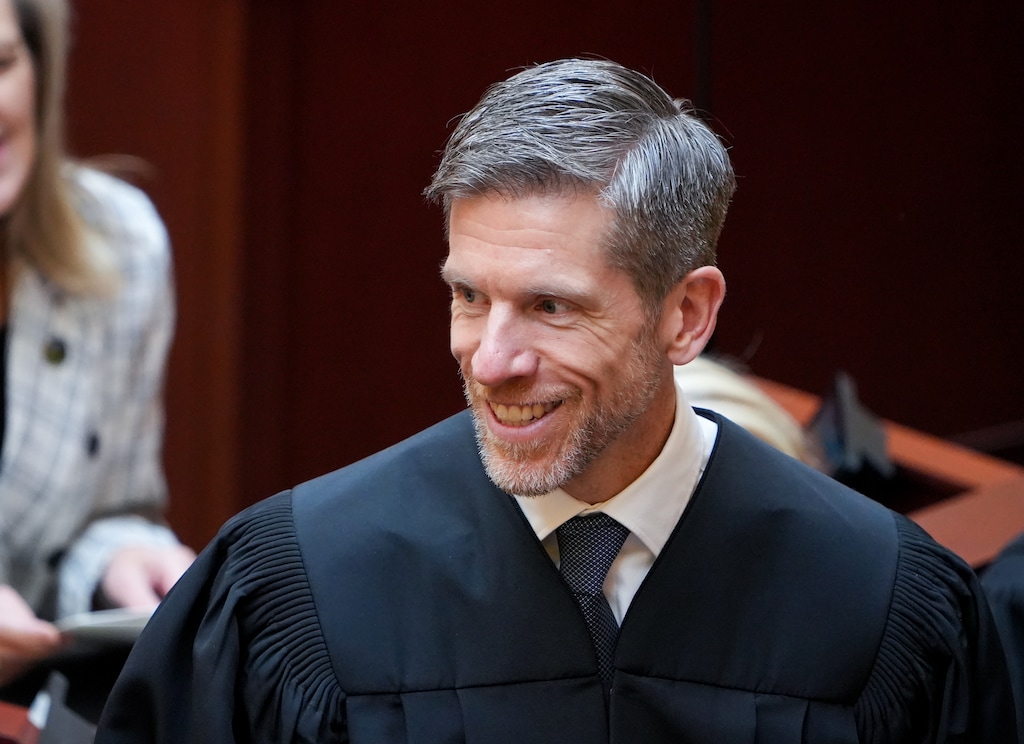
Utah Supreme Court Justice John Nielsen will not take part in two cases deciding whether it was constitutional for the Republican-controlled Legislature to create a three-judge panel to rule on challenges to state laws.
Facing a request from Planned Parenthood Association of Utah to disqualify him from its case challenging a near-total abortion ban, Nielsen last week decided to recuse himself. He previously represented Pro-Life Utah, a group that helped craft the blocked trigger ban, when it filed a brief defending the state law.
Earlier this year, he opted not to participate in a similar challenge to the three-judge panel brought by the League of Women Voters and Mormon Women for Ethical Government — the groups suing over the Legislature’s gerrymandered congressional districts.
As an attorney, Nielsen wrote a brief opposing the power of citizen initiatives and had consulted with the Legislature on its legal strategy for repealing the Better Boundaries initiative that created an independent redistricting commission and barred partisan gerrymandering.
Planned Parenthood sought to have him disqualified from its case, as well, arguing the same conflict of interest existed, but he had not voluntarily stepped away. Utah Attorney General Derek Brown argued Nielsen need not do so.
In July, when Nielsen recused himself from the gerrymandering case, the court said that the justices did not believe his involvement “is a basis for disqualification.” But last Thursday, the court clerk notified the parties that Nielsen wouldn’t hear the case.
“Though Justice Nielsen still believes that there are strong reasons supporting the duty to sit here,” the notice reads, “he concludes on further reflection that the duty to recuse is stronger.”
A lower court judge will be assigned to fill in for Nielsen. Justices are scheduled to hear arguments for and against the legality of the three-judge panels on Oct. 5.
“The rules about recusals are objective and clear — a judge should recuse when their impartiality might be reasonably questioned,” Planned Parenthood Association of Utah President and CEO Shireen Ghorbani wrote in a statement. “We appreciate Judge Nielsen for recusing in our case.”
In 2020, the Legislature passed a “trigger law” seeking to ban nearly all abortions in the state, except in narrow circumstances — when the pregnancy threatens the life of the mother, is the result of rape or incest or if doctors agree the fetus is not viable.
The law took effect after the U.S. Supreme Court struck down Roe v. Wade, but was put on hold within a few days after Planned Parenthood took the state to court. The nonprofit has been fighting the law for years.
The Utah Supreme Court in 2024 declined to lift an injunction on the law. Abortion is currently legal up to 18 weeks in the Beehive State.
Nielsen’s brief filed on behalf of Pro-Life Utah used decades of newspaper articles to argue the rights afforded in Utah’s constitution were not meant to protect access to abortions.
Republican legislators earlier this year created the panel of three district court judges to hear cases involving lawmakers or the governor. That law moved the abortion case, the ballot initiative dispute and two others to the panel, but the plaintiffs in all four cases contend the Legislature didn’t have the authority to create the new system.
Already, in the abortion case, the litigation over the constitutionality of the panel has caused significant delays.
The parties had been waiting 18 months for a key hearing in the abortion lawsuit, originally scheduled for last April, but that hearing was canceled until the Supreme Court determines if the three-judge panels are constitutional.
The justices were scheduled to hear arguments regarding the judicial panels Wednesday, but those were pushed back until Oct. 5.
Meanwhile, Gov. Spencer Cox has nominated two new candidates — 5th District Judge Matthew Bell and attorney Mike Menssen — for a pair of vacancies created by the departures of Justice Diana Hagen and Chief Justice Matthew Durrant.
The nominees’ confirmation hearings are scheduled for Sept. 11 and 14. Barring an unforeseen turn, they are expected to be confirmed by the Republican-dominated Senate on Sept. 16.
Two other new justices — Jay Jorgensen and Stephen Dent — took their spots on the bench in June after Cox and GOP lawmakers expanded the court from five to seven members following a series of defeats in front of the high court, including in the abortion and gerrymandering cases. Critics accused the Republicans of packing the court.