 Addy Baird
 Trevor Christensen
On July 24, 1847, the first Mormon pioneers arrived in the Salt Lake Valley. This, their prophet and leader Brigham Young said, was the place.
At least, that’s the story of Pioneer Day many Utahns are familiar with.
The history of the holiday is more complicated, and speaks to the tensions between religious and non-religious communities in the state, the impact of the pioneers on Indigenous people in the area and the early Latter-day Saint relationship with celebrating the United States.
The basics of Pioneer Day mythology are true, Mark Melville, the assistant editor for Utah Historical Quarterly, said, but it leaves out some important details. Among them are the fact that the pioneers began arriving several days prior to the 24th, and that Brigham Young and several others almost immediately turned around and went back for more supplies, rather than immediately settling into the area.
And, he said, our definition of a “pioneer” has changed over the years. Originally, the “pioneers” meant the original settlers who traveled across the plains with handcarts and covered wagons. Now, it includes anyone who came to the area prior to the completion of the railroad. The Latter-day Saints who arrived to the area pulling hand carts — an enduring image of Pioneer Day — made up only a very small percentage of the settlers, Melville said.
The first Pioneer Day was celebrated in 1849, two years after the first LDS settlers arrived in the Salt Lake Valley, though it was not yet called “Pioneer Day.” The celebration, according to Melville, looked a lot like the Fourth of July.
After the killing of the LDS Church founder Joseph Smith in Illinois, he said, the early Latter-day Saints felt like the United States had let them down. And by 1849, the pioneers were kind of “ambivalent” about July Fourth, but they didn’t celebrate it in Utah. Instead, they put on a similar celebration on the 24th.
In the years that would follow, the holiday became official: During the first legislative session after Utah was granted statehood, lawmakers made Pioneer Day an official holiday, and in the decades after that, the celebration began to encompass not only pioneer history but Utah history.
Still, Melville noted, the 24th of July has always maintained close ties with The Church of Jesus Christ of Latter-day Saints.
“People who are not part of the church can feel left out, and that has been the case since there’s been a 24th of July celebration,” he said. “There’s always been this tension between them.”
That tension birthed “Pie and Beer Day” in Salt Lake City in the early 2000s, but there’s a much older tension in the state.
‘The conqueror writes the history’
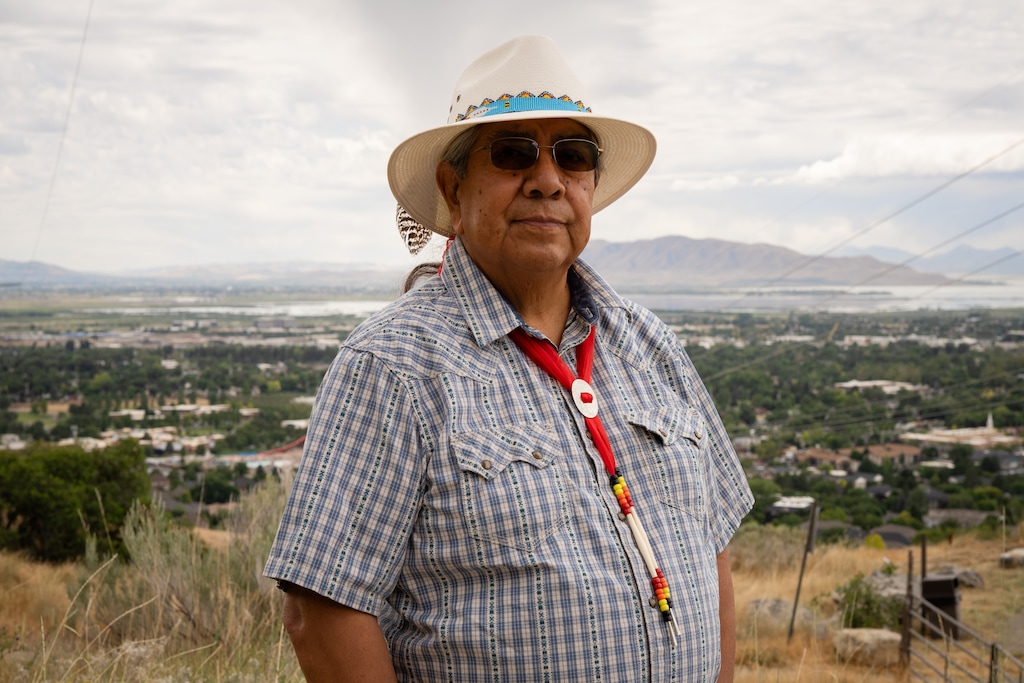
For Forrest Cuch — a Ute elder, author and the former director of the Utah Division of Indian Affairs — Pioneer Day celebrations evoke a history that isn’t often talked about.
At first, Cuch said, Indigenous people had no problem with the pioneer settlers.
“Their values were first and foremost belief in the creator, and also they believe strongly in sharing,” he said. “They believed in the importance of generosity and in reciprocity and sharing. And so their first reaction is ‘Sure, we will share. People need to eat.’”
But as the LDS members began to allow their cattle to graze further south and fished in Utah Lake at higher rates, Indigenous people grew concerned.
Eventually, those tensions came to a head in early 1850 with the Fort Utah War, both Cuch and Melville said. Then, LDS settlers attacked the Ute band and killed between 40 and 100 Ute men and one or two Ute women. Others, including Indigenous women and children, were captured, and some were sold as slaves to the settlers.
It frustrates Cuch that this part of Utah history and its impact in the decades to come isn’t part of the Pioneer Day conversation. “The conqueror writes the history,” he said.
As Utahns celebrate this summer, Cuch said he hopes state leaders will make a point to improve their relationships with the tribal leaders in the area, and that those conversations can begin a healing process for both the descendants of the tribes and the descendants of pioneers.
“Out of those discussions will evolve meaningful changes,” he said during a recent interview at Utah Lake.
“What can we do to make this place more sustainable, more beautiful?” he asked. “And how can we not be so harmful to the earth and the resources in this area? What can we do to live in harmony with it and eventually harmony with each other? Those are the questions that need to be asked.”