 Julie Jag
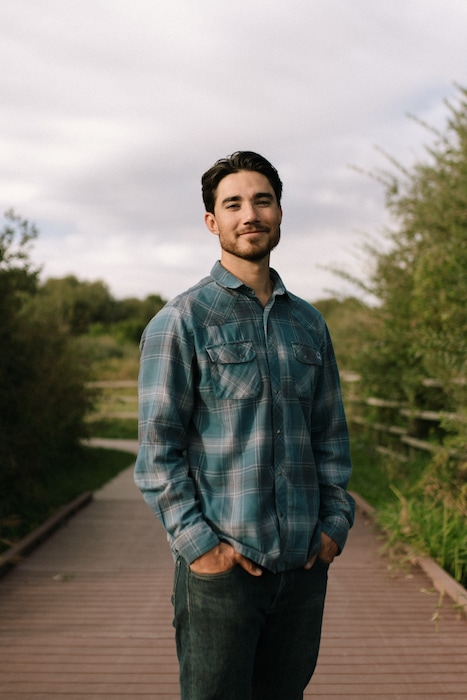
To be clear, Clint Richins says he does not want to own a ski resort. Nor does he want to be the next Rob Katz, the CEO of Vail Resorts Inc.
What Richins does want is a place he can take his family skiing without breaking the bank, that prioritizes Utahns over out-of-state visitors and that has terrain that newbies and veterans alike could enjoy.
Also, he wants the state to pay for it.
“I can’t really solve the housing problem,” Richins, a 31-year-old Logan resident, told The Salt Lake Tribune. “I can’t really bring gas prices down. But I can sure make some noise about the fact that we could explore other options for skiing.”
Utah’s ski resorts — particularly the largest ones in the Wasatch Mountains — have not done enough to make skiing and snowboarding affordable and approachable for newcomers, families and especially locals, Richins said. Their business models generally rely on sales of season passes that often encompass multiple resorts and cater to out-of-town visitors. He doesn’t fault them for that strategy, which has generally proven lucrative. But, he argues, that approach won’t get more Utahns on the slopes — which he believes should be a priority for the state as it prepares to host the 2034 Winter Olympics.
Perhaps, he said, a state-run ski area could.
“What I’m doing is extremely, in my opinion, controversial,” said Richins, who graduated with degrees in finance and economics from Utah State and now works for a fitness equipment supplier. “Yes, I want to build a ski area. I want to do that. But what I want more is I just want us to ask the question: Should we do this?”
(Bethany Baker | The Salt Lake Tribune) Skiers ski down the mountain during opening day at Solitude Mountain Resort in Brighton on Thursday, Nov. 27, 2025.
The concept of a publicly funded ski area has been around almost as long as the sport itself, with the U.S.’s first community-owned ski hill opening in Colorado in 1915. Today, nearly 100 community-owned or nonprofit ski hills exist in the United States. Though most are small, that list includes Idaho’s 2,600-acre Bogus Basin and Vermont’s Mad River Glen, which Ski Magazine called the most challenging resort in the East.
Richins has had visions of a state-owned resort carving through his brain for two years, ever since the funds and flexibility he’d previously put toward snowboarding were reallocated to caring for his newborn son. Yet not until earlier this month — prompted by Park City Mountain’s adoption of a new slogan, “Larger Than Life” — did Richins decide to broach his idea on Instagram.
The post drew more than 500 comments and far less “grumpiness” than Richins expected. So, he posted again. Two weeks and four posts later, he created the nonprofit Utah Public Ski Area Coalition, set up a website and released a financial plan.
Not a bunny hill
Richins is not thinking small. The ski area he envisions would be about 1,000 acres — roughly the size of Beaver Mountain or Brighton Resort — with some 2,500 feet of vertical, which is similar to Alta Ski Area. It would run five four-seat chairlifts and a Magic Carpet conveyor lift. To hedge against warming winters, he said its base must sit at an elevation of at least 7,000 feet and it must have access to water for snowmaking.
Still, Utah already has 16 lift-served options for skiers. What would make residents choose the state-run resort instead?
Richins said the price alone would set it apart from the resorts in Park City and the Cottonwood Canyons. Under his hypothetical model, lift tickets would cost Utah residents about $60 ($30 for kids), with out-of-state visitors paying more than twice as much. By comparison, a peak-day, walk-up ticket at Park City Mountain costs $369 this season.
Meanwhile, he expects the caliber of the terrain and length of season to differentiate it from places like Nordic Valley Resort near Ogden. Nordic Valley allows kids ages 12 and under to ski free and often offers lift tickets for less than $20. However, it struggles to keep snow on its base — which sits at an elevation of 5,365 feet — and has a reputation as a beginner’s mountain.
The new ski area would also be closer to the state’s population center than resorts like Beaver Mountain, which is situated near Bear Lake, and Brian Head, Utah’s southernmost ski area.
Location, however, is the gaping hole in Richins’ otherwise expansive plan. He said he has several sites in mind within a 90-minute drive of Salt Lake City — which he said is key to the community ski hill’s success. Most of them are on U.S. Forest Service property and would require an environmental study and the approval of a special use permit. Until he can arrange feasibility studies, and perhaps narrow down the options, though, Richins said he is purposely keeping the locations under wraps.
“The site is going to be the most controversial and the hardest thing to get past,” he said.
The cost will be a close second.
It will take $84 million to make the resort operational, Richins reckons. At full buildout, it will cost closer to $104 million.
Roughly six municipal golf courses could be built with that much money. But, Richins noted, the state has more than 60 of those — several of which operate at a loss — and it would only have one ski area. He calculates the state could see a return on its investment within five years.
And Richins believes the entire project can be undertaken without raising taxes.
“If it raises taxes, we’ll see if I can have the stomach to keep going,” Richins said, “because I don’t want to do that.”
Size matters
Richins and a group of volunteers are already seeking out sources of funding. One option is to find a donor. Another, since the ski area would be focused on getting kids outside in the winter — and possibly in the summer as well, if it offers mountain biking or hiking — is to tap into some of the $206 million windfall Utah is expected to get from the settlement with Meta over teen social media addiction.
To start, though, Richins plans to seek help from the Utah Outdoor Recreation Initiative, a pool of about $20 million earmarked for recreation projects across the state. In 2025, that fund helped support the development of Snowland Ski Area near Fairview — Utah’s first and only nonprofit ski hill.
(Bethany Baker | The Salt Lake Tribune) Brent Lange, the board chair for the Snowland Foundation Inc, removes the sign that reads ÒComing Soon!Ó as Snowland Recreation and Education Area opens its lone rope tow to the public in Fairfview on Saturday, Jan. 17, 2026.
Jason Curry, the director of the Division of Outdoor Recreation, which manages that fund, said Snowland helped set a precedent for state-subsidized ski areas. Though Curry does not decide where the funds go, he said he would be inclined to support Richins’ quest to build a ski area that caters to Utahns.
“His observation is similar to mine and others,” Curry said, “that affordable options for skiing for Utah residents has become more and more difficult over the last decade or so.”
Still, what gives Curry pause is the scale of Richins’ vision. Large and costly projects typically are exponentially more complicated to bring to fruition than ones like Snowland — where organizers sought to install a tow rope and build a parking lot on a 20-acre parcel for which they’d already obtained a Forest Service permit.
(Julie Jag | The Salt Lake Tribune) Skiers line up to board Deer Valley Resort's new Keetley Express during its maiden voyage Tuesday, Dec. 31, 2024. The high-speed, six-person bubble lift is the first to operate out of the resort's new East Village base and gives skiers access to some of the more than 3,000 acres of new terrain Deer Valley plans to open in the coming years.
Nathan Rafferty, the president and CEO of Ski Utah, said he thinks the local ski industry’s marketing arm would be supportive of a large area if it was “in the right location and served the right needs of the community.” However, he added that an unintimidating hill in a neighborhood would likely be more efficient at converting Utahns into skiers and snowboarders than a big resort.
Utahns “are jaded a little bit about what their definition of a ski area is because they think it’s got to be an Alta or Deer Valley, and it just totally doesn’t,” Rafferty said. “We need more of these small little ski areas just out in Daybreak or Riverton. You know, let’s get a teeny tiny ski area out there just so people can slide on the snow.”
If that’s what comes of all his effort, Richins said he’s OK with it. As an experienced skier and snowboarder, though, he said he’d rather the state build something that would benefit him as well his neighbors — and son — who have never slid down a slope.
“We’ve done a fantastic job bringing people here. We’ve marketed the ‘Greatest Snow on Earth,’ and there have been a lot of benefits from that in the state,” Richins said. “But I think we’re at a point where we have to start asking questions on whether or not the people here can actually participate.”