 Leia Larsen
Note to readers • This story is made possible through a partnership between The Salt Lake Tribune and Grist, a nonprofit environmental media organization.
It didn’t take long for the first mining claims to crop up on the lands that were previously protected in Bears Ears National Monument.
Prospectors placed 16 claims at Bears Ears the same day the lands opened to new mining claims, 60 days after President Donald Trump shrank the monument by about 90% in July. All of the claims appear to have been filed by small-scale local miners with other jobs, but groups like the Southern Utah Wilderness Alliance remain alarmed by the filings.
“Hobby miners who want to go locate claims, play miner on the weekend, [still] leave disturbance and pollution in their wake that really damages the monument resources,” said Steve Bloch, an attorney for the environmental nonprofit.
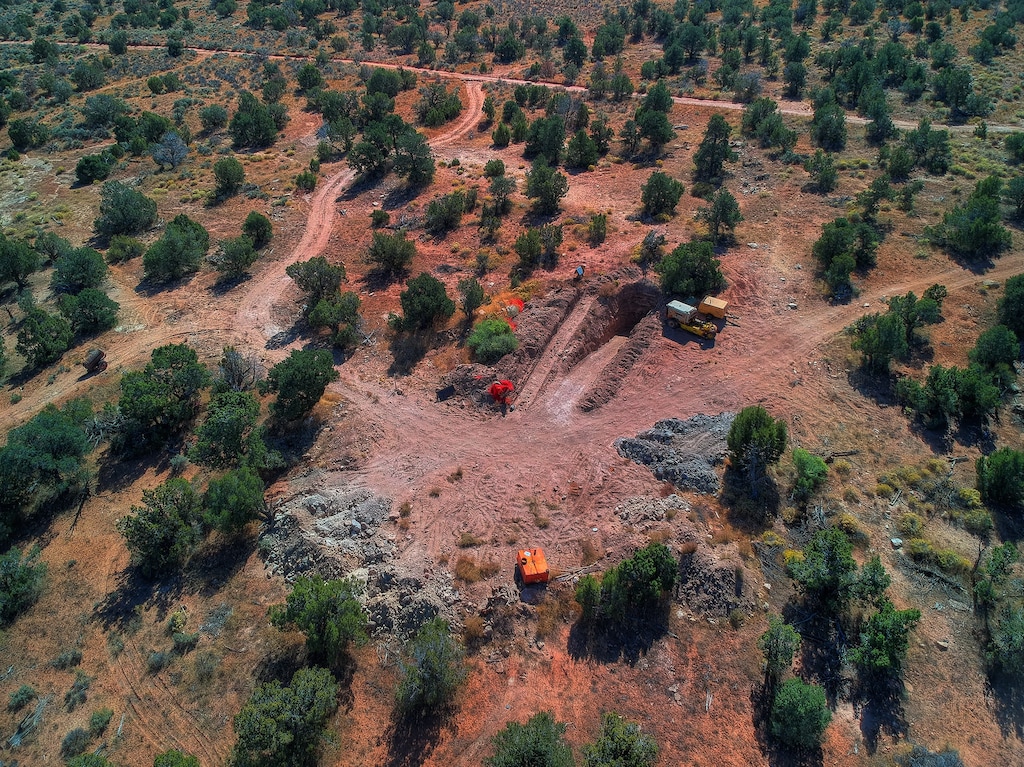
(Christopher Cherrington | The Salt Lake Tribune)
George Schultz, an off-roading guide based in Moab, filed three claims in the Lockhart Basin. He said staking a claim is merely a “step” in the mining process.
“It’s important ... to have a balanced approach to this,” Schultz said in a phone interview. “Public lands, especially those administered by [the Bureau of Land Management], are for multiple use, ... sustainable use.”
Schultz declined to say which minerals he expected to mine at his claim sites, but his LinkedIn profile notes experience in uranium exploration.
The remaining 13 Bears Ears mining claims were filed by Kimmerle Mining, including two adjustments to the 21-acre Easy Peasy mine and 11 additional claims nearby.
Kyle Kimmerle, a managing member of the mining company, declined to comment. He was also appointed to the board of directors of Urano Energy in 2024. Urano focuses on uranium mining in the United States, according to company information.
Bears Ears became a political ping-pong ball immediately after the monument was established by President Barack Obama during his final weeks in office in 2016, adding protections to 1.35 million acres of federal land in the southeastern corner of the state.
Trump slashed the monument’s footprint by about 85% during his first term in 2017. President Joe Biden restored the monument’s original boundaries and also slightly expanded it during his term, only for Trump to once again shrink its size over the summer.
Grand Staircase-Escalante National Monument, established by President Bill Clinton in 1996, saw a similar back-and-forth between the Trump and Biden administrations.
Both monuments were unpopular among Utah’s elected leaders, although numerous surveys show they have widespread support among voters.
The site is valued for its extensive recreational, cultural, tribal and archeological resources. It was co-managed by the BLM and the Bears Ears Commission, made up of representatives from the Hopi Tribe, Navajo Nation, Ute Mountain Ute Tribe, Zuni Tribe and the Ute Indian Tribe.
In the latest proclamation shrinking both monuments, Trump disbanded the tribal commission. He also listed a “grab bag of minerals” the lands “may or may not” contain, Bloch noted, including silver, copper, molybdenum, lead, uranium, vanadium and zinc in Bears Ears.
“He was kind of flagging for people that he, [and] the administration, think that mining is a better use of these areas,” Bloch said.
Kimmerle was also party to a 2023 lawsuit challenging Biden’s restoration of Bears Ears’ boundaries in 2021. His company owns the Easy Peasy mine, and dug up 30 tons of ore in search of uranium in 2018. Uranium prices weren’t profitable at the time, however, and the mine stopped operations.
But with the rise of artificial intelligence and massive projected demands on the electricity grid, the Trump administration and Utah Gov. Spencer Cox’s own Office of Energy Development have championed nuclear energy as a solution for powering the country’s future. Uranium is used in nuclear generation.
Having his mining claims “locked up” in the Bears Ears monument made them “useless,” Kimmerle asserted in the 2023 lawsuit, and cost him up to $3 million in lost profits.
Kimmerle attempted to file his Bears Ears claims in July, shortly after Trump issued his proclamation slashing the monument boundaries. But the proclamation did not open the lands to new mining claims until Sept. 11 — the same day San Juan County recorded both the Kimmerle and Schultz claims, records obtained by SUWA show.
The CEO and chairman of Energy Fuels also bought thousands of shares of stock just days before Trump downsized the monument. Energy Fuels operates the White Mesa Mill directly next to the former Bears Ears monument boundary. It is the last conventional uranium processing site in the nation.
Utah was historically the third-most productive state for uranium, according to information from the Utah Geological Survey, with most of those minerals coming from the Colorado Plateau.
But Bloch said he doubts there is enough uranium available to justify the expense and environmental damage of mining on lands removed from Bears Ears.
“It’s not like people weren’t poking around in the monument, locating claims, moving dirt, seeing what was there” in the decades before Bears Ears became a monument, and during the first Trump administration when it was originally shrunk, Bloch said. “There were no production-level mines that were established.”
Schultz also cautioned that staking claims does not mean mines will blanket the landscape.
“Geology dictates that,” Schultz said. “Even if a company wanted to develop an area ... it has to be at a scale that would make it profitable.”