 Leia Larsen
Note to readers • This story is made possible through a partnership between The Salt Lake Tribune and Grist, a nonprofit environmental media organization.
The Trump administration is considering opening a vast swath of a wildlife refuge near Vernal to expanded oil and gas leasing.
Under the U.S. Bureau of Land Management’s proposal announced last week, 5,200 acres of the 12,000-acre Ouray National Wildlife Refuge, which includes about 16 miles of the Green River, could be opened to oil and gas leases.
Companies would need to operate under “no surface occupancy,” which means any equipment would be located outside the refuge and would reach oil and gas deposits through directional or horizontal drilling.
“Oil and gas development on BLM-managed public lands in Utah provides the Beehive State a $3 billion boost,” the federal agency wrote in a news release, “and nationwide BLM oil and gas generates an additional $177 billion to fund the U.S. economy.”
The move is meant to align with President Donald Trump’s “Unleashing American Energy” orders. The BLM opened a 30-day public comment period that ends Oct. 5. The agency will also host a listening session at its Vernal Field Office on Sept. 22. Instructions to participate and contact information is available on the Federal Register notice.
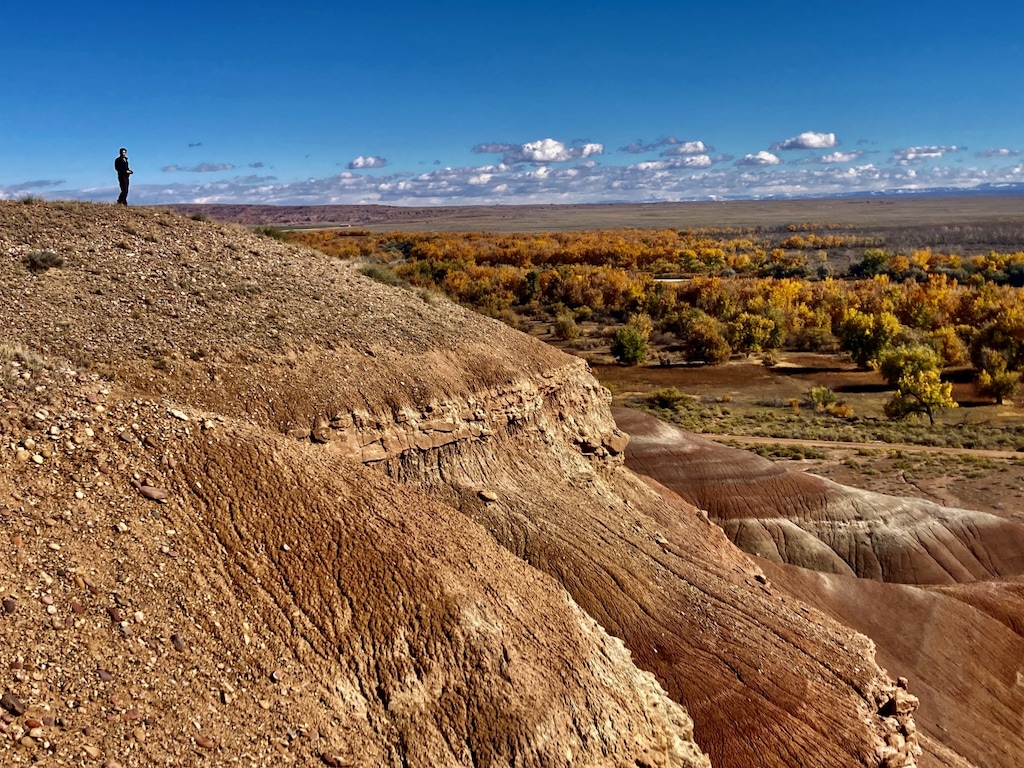
The Ouray National Wildlife Refuge lies about 35 miles southwest of Vernal, in the middle of the Uintah Basin’s oil and gas country. The federal government created the refuge in 1960 to protect migratory and nesting habitat for birds like sandhill cranes and yellow-billed cuckoos, which is listed as threatened under the Endangered Species Act.
The Ouray refuge also has a fish hatchery that helps rebuild populations of native Colorado River fish, including the razorback sucker, Colorado pikeminnow, bonytail chub and humpback chub.
(Nathan Vargas | U.S. Fish and Wildlife Service) A U.S. Fish and Wildlife Service staff member handles a razorback sucker, an endangered fish of the Colorado River Basin, on May 6, 2020.
Environmental groups worry that drilling beneath the refuge could contaminate groundwater or the Green River. Hydraulic fracturing could also pollute the wells that supply water to the hatchery, said Taylor McKinnon, southwest regional program director for The Center for Biological Diversity.
“It’s a wildly irresponsible proposal.” McKinnon said. “Like so many other decisions we’ve seen, [it] puts the interests of oil and gas corporations above just about everything else.”
Portions of the refuge are subject to split-estate agreements, in which the U.S. Fish and Wildlife Service owns the surface land, but other entities own the underlying mineral rights. The Utah Trust Lands Administration owns several hundred acres of subsurface mineral rights beneath Leota Bottom.
State records show Texas-based Thurston Energy LLC entered into an oil and gas contract for those resources in 2011.
Center for Biological Diversity obtained records in 2013 showing that U.S. Fish and Wildlife Service employees raised concerns about potential water contamination when Thurston sough to extract oil beneath the refuge.
“As you can understand, a fish hatchery is only as good as its water source,” the employees wrote, as reported by Mother Jones.
Thurston had plans to extract up to 400,000 barrels of oil from state mineral holdings using two wells at the refuge in 2019. That proposal was approved by the first Trump administration.
A spokesperson with the Trust Lands Administration said the state manages 1,568 acres of surface ownership and 2,354 acres of oil and gas mineral ownership within or adjacent to the Ouray refuge. All of its mineral interests are currently under lease, and those leases have generated $28 million in royalties and bonus payments for the Trust Lands Administration, which uses revenue to fund Utah schools.
“Advances in industry technology, particularly horizontal drilling, have significantly reduced the need for surface disturbance while improving resource recovery and reducing the risk of drainage,” the spokesperson said in an email.
The latest proposal, however, applies to federally owned mineral rights beneath the refuge, not those owned by the state.
But Center for Biological Diversity representatives said their concerns about impacts to fish species remain the same, regardless of who owns the underlying oil and gas.
“Polluting the water source for the hatchery,” McKinnon said, “would be a dangerous setback for endangered fish recovery in the Upper Basin writ large.”