 Brock Marchant
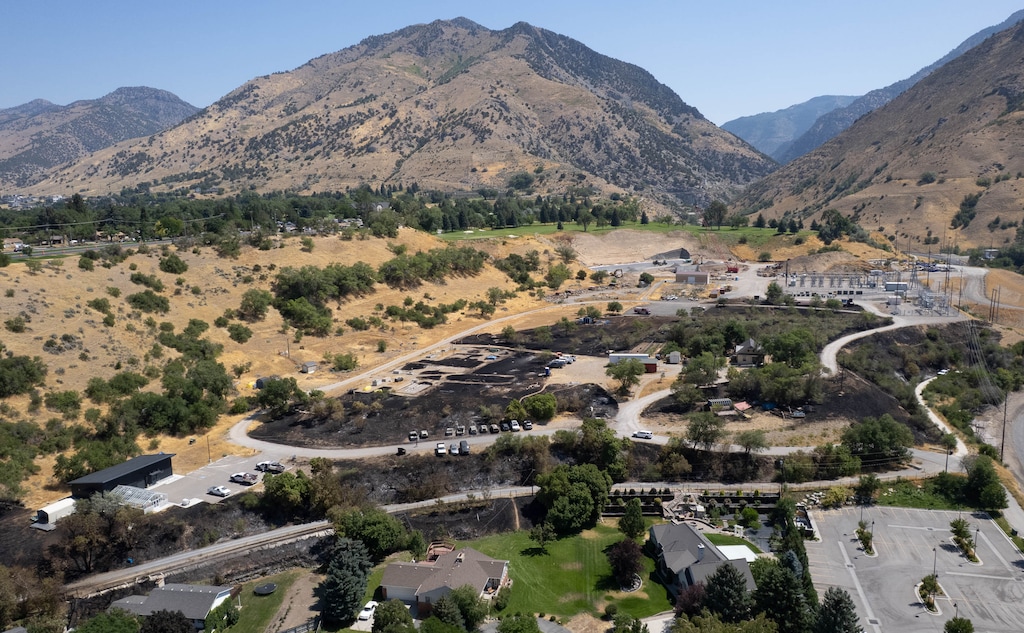
Logan • Almost two months after the Canyon Road Fire ripped through a hillside near the mouth of Logan Canyon, a gray burn scar filled with ashen plants sits as a stark reminder of how close the flames came to homes.
The July 31 blaze, which investigators determined was started by spontaneous combustion in a Utah State University compost pile, prompted officials to evacuate about 100 homes within 1.5 miles of 600 East and Canyon Road.
But, according to the city, some in the area reported that although they had signed up for Cache County’s emergency notification service, Everbridge, they never got the notice to leave.
In the days following the fire, Logan Mayor Mark Anderson said the system breakdown was “unacceptable” and that the city was trying to figure out what went wrong.
The system, however, operated exactly like it was supposed to, Logan Emergency Manager Ronald Gonsalves said.
What happened
During a wildfire preparedness roundtable for Cache County officials on Friday, Gonsalves addressed the many concerns he has heard about Everbridge since the evacuations.
“Since the fire, I had 134 calls from community members asking me to check their registration on the Everbridge system,” he said. “A hundred and fourteen of them essentially had mistyping information on their registration.”
In some cases, he said people had entered the wrong digits for their home address. In other instances, he said people had their address right, but had written the incorrect city or had listed their landlines as cellphones, rendering them unable to receive text notifications.
(Francisco Kjolseth | The Salt Lake Tribune) Crews put out hotspots at the Canyon Road Fire.
The remaining 20, he explained to Utah Public Radio and The Salt Lake Tribune, were people looking for help registering and people whom Gonsalves said registered after the fire.
It’s possible, he said, that some information may not have been copied over completely when the county switched emergency notification systems years ago.
“I did not identify a confirmed failure of the Everbridge system to deliver a notification to a properly registered individual,” he said in an email after the roundtable.
During the meeting, Gonsalves said he also has met with Everbridge engineers, who found no issues with their system the night of the fire.
“I’m confident in the system,” he said.
Lessons learned
Even though Gonsalves believes that issues surrounding Everbridge were largely caused by registration errors, he did acknowledge some lessons Logan learned from the fire.
For one, he said the city never activated what’s called the Integrated Public Alert and Warning System, which sends alerts to cellphones based on their proximity to certain cell towers.
During the meeting, he estimated that about 4,000 to 5,000 people could have been in the evacuation zone and would have gotten the message to evacuate if the system was used.
(Francisco Kjolseth | The Salt Lake Tribune) A tapestry of fire hoses cover the hillside where the Canyon Road Fire in Logan burned the night before.
Instead, he estimated about 2,000 people in the area received an Everbridge notification.
Gonsalves chalked the oversight up to a “lack of training.”
“We identified that that’s a shortcoming that we need to work on and we need to get trained on and figure out,” he said.
Gonsalves said he had been told that by sending an Everbridge message to the public marked “imminent threat” — like his team did — it would automatically be distributed through the emergency notification system.
“However, that wasn’t the case,” he said.
For the future, he said he has established lines of communication to make sure pressing messages get sent out during emergencies.
What now?
To make sure they are in the know during future emergencies, Gonsalves recommended Cache County residents check their registration in the Everbridge system. You can check yours at tinyurl.com/CacheCountyNotifications.
He also urged people to make 72-hour kits and family emergency plans.
Note to readers • This reporting position is a partnership with Utah Public Radio, a division of Utah State University.
 I’m Brock Marchant, The Salt Lake Tribune’s Cache Valley reporter in partnership with Utah Public Radio. As a valley native, I’ve seen firsthand the issues that people face everywhere from Richmond to Avon — unaffordable housing, dwindling open space and a rapidly increasing population that has cities struggling to keep up. I want to explore local problems by reporting on the ground, not just quote elected officials and news releases. As residents work diligently to overcome challenges, I want to tell their stories and share their solutions. Smart, hard-working people have built the valley’s history, and I’m certain they will frame its future.
As a nonprofit newsroom we rely on donations from readers like you to make this work possible. Donate today to support this reporting.