 Jessica Schreifels
Two Grand County sheriff’s deputies have filed a federal lawsuit against the county and their boss, alleging that Sheriff Jamison Wiggins has retaliated against them after they spoke publicly about their concerns surrounding the department.
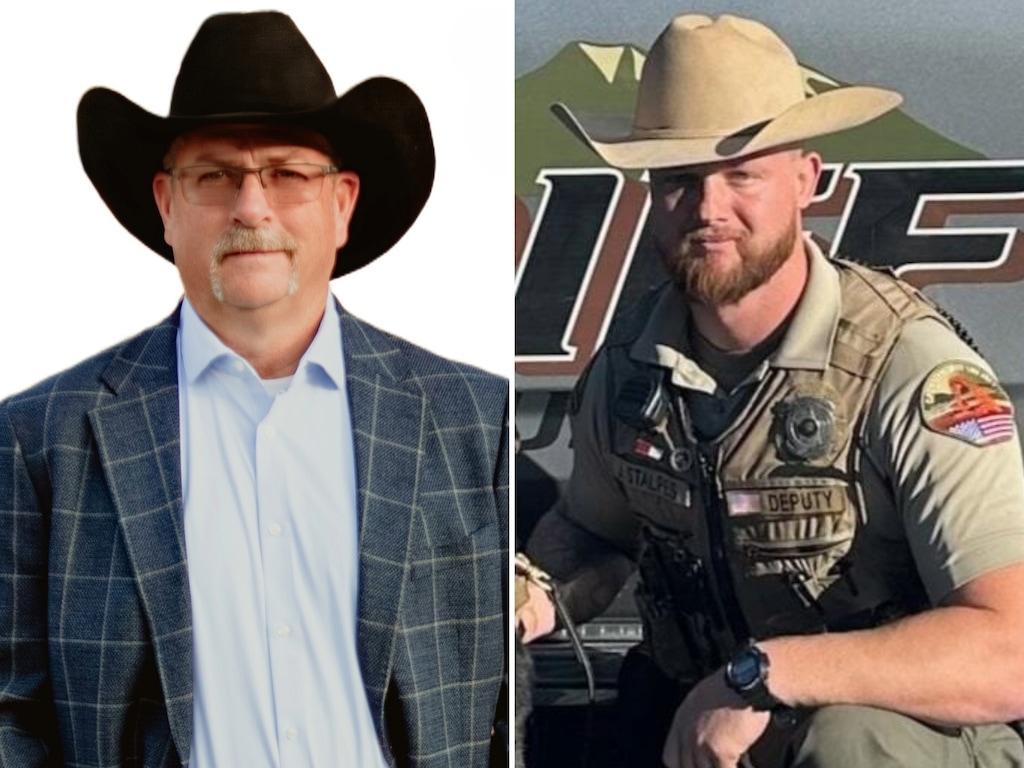
Deputies Craig Nelson and Joshua Stalpes filed the lawsuit Sept. 18, alleging that the sheriff has carried out a “sustained pattern of retaliation” against them after they engaged in constitutionally protected speech and political activity. The deputies were interviewed by The Salt Lake Tribune and quoted in a June investigation into reported turmoil inside the Grand County Sheriff’s Office, including accusations that Wiggins tried to derail a major drug trafficking prosecution.
Their attorney, Amanda Hansen, said Tuesday that there were urgent reasons to file their lawsuit, and asserted the timing wasn’t connected to Wiggin’s re-election campaign. She alleged that, in retaliation, Nelson has been put in dangerous situations with no backup, and Stalpes has been effectively demoted from his task force commander role.
“We can’t continue to let Deputy Nelson be exposed to risk like that,” she said, “and we can’t just stand by while Deputy Stalpes loses his position.”
Along with asking for punitive and compensatory damages, the two deputies are seeking a judge’s order prohibiting Wiggins and Grand County from withholding available backup to Nelson on the basis of his protected speech or political activity, and to stop them from removing Stalpes from his commander job or reassigning him to patrol shifts.
They also asked the judge to order that the sheriff be prohibited from taking any further disciplinary action against them connected to their public statements.
(Grand County Sheriff's Office) Sheriff Jamison Wiggins
They are suing the county, Wiggins, and four other leaders in the sheriff’s department. Grand County Attorney Stephen Stocks declined to comment on the lawsuit, saying the county doesn’t comment on pending matters. Wiggins did not respond to an email seeking comment.
Backup called off
Stalpes, who made the drug trafficking arrest that led to the case the sheriff allegedly tried to get dismissed, spoke to The Tribune about the case and his efforts to seek an outside investigation. Nelson, who at the time of his interview was gathering signatures to challenge Wiggins in the November election, talked about why he was running for sheriff and the problems he believed existed within the department.
Nelson alleges in the lawsuit that the sheriff and his top leaders began retaliating against him when he announced in January that he was running for sheriff, pointing to a call when he was dispatched to a rural area to locate a homicide suspect and a sergeant called off backup. That was eight days after he announced he was running against Wiggins.
Nelson did not end up collecting enough signatures to get on the ballot; Wiggins faces Jim Winder, a former Salt Lake County sheriff and one-time Moab police chief, as his election challenger.
“The campaign ended for Nelson in June,” said Hansen, his attorney. “But the retaliation has not.”
The lawsuit alleges punishment escalated after The Tribune article was published in June: Nelson was written up for being quoted in it and moved to a night shift with one day’s notice. And he again was sent to a high-risk call and denied backup last month, according to the suit.
‘Demoted in all but name and pay’
Stalpes was also given a “letter of counsel” on June 12, less than a week after The Tribune article published.
“The First Amendment protects everyone,” the letter begins, “and the agency’s interests are outweighed by these rights.” Grand County Sheriff Lt. Al Cymbaluk added that the letters did not “pass judgment on the accuracy of the article or your objectives.”
However, Cymbaluk continued, Stalpes violated sheriff’s office policies that prohibit employees from speaking to journalists without prior approval and bar them from releasing confidential law-enforcement information. (Nelson’s letter reads nearly identically.)
The lawsuit notes that the term “letter of counsel” doesn’t appear in the sheriff’s policy manual addressing discipline, and that Grand County Personnel Services determined that this form of discipline does not qualify for any review or appeal within the county processes.
Then, in early August, Stalpes alleges in his lawsuit that he was called into a meeting with Wiggins, Cymbaluk and two other department leaders. In that meeting, he alleges Wiggins brought up the article, told Stalpes that he “talks smack” about the sheriff’s office and repeatedly characterized his conduct as “borderline insubordinate.” This meeting, Cymbaluk allegedly told Stalpes later, was an “intervention.”
On Sept. 2, the lawsuit says, a sergeant told Stalpes that the sheriff wanted him removed as task force commander because he was “insubordinate.” Since then, Stalpes has been assigned to patrol shifts, the lawsuit states, despite having a higher rank than other deputies and a job description which does not include patrol work.
“He’s been demoted in all but name and pay,” Nelson, his attorney, said. “His duties have completely shifted.”
Misconduct allegations
For its recent investigation, The Tribune spoke to seven current and former Grand County sheriff deputies. They described a workplace where they felt criticism of leadership was viewed as disloyalty and where even small symbols of status — such as a directive that only Wiggins and his chief deputy wear cowboy hats in staff photos — became points of resentment among employees.
Nelson and Stalpes were the only current deputies who were identified by name in the article.
Wiggins has previously said concerns around morale reflected the challenges of a new administration, rather than dysfunction.
“We have also recently come through a period where those dynamics were more pronounced,” he wrote in response to questions sent to him in May. “A Sheriff’s first term is always the hardest; everybody is transitioning into their new roles, which will always come with its own challenges.”
The most serious dispute centered around accusations that Wiggins had pushed to have charges dropped in the 2023 drug case after he was contacted by a local defense attorney.
During that traffic stop, Stalpes seized more than 50 pounds of methamphetamine and 13 kilograms of cocaine — but he and others now allege Wiggins tried to get the case dismissed at the behest of a defense attorney, and later retaliated against those who questioned him.
(Bethany Baker | The Salt Lake Tribune) Stalpes conducted the traffic stop on this rural stretch of Interstate 70.
Wiggins denies these allegations, but acknowledged he spoke to a defense attorney about the case after she raised concerns. Stalpes told The Tribune that Wiggins told him to “get this case dismissed” and that it “wasn’t worth it.” And, at one point, the sheriff texted Stalpes: “I’m trying to convince [the prosecutor] to drop your case tomorrow.”
The defense attorney, Happy Morgan, said in response to questions that she felt there were problems with Stalpes’ investigative methods which she alleged were not in line with the law or county policies.
A conflict prosecutor later dismissed the case, citing a lack of admissible evidence. Stalpes said there was no internal investigation, and he was never disciplined and had instead been promoted to task force commander.
Wiggins denied pressuring Stalpes or the original Grand County prosecutor. He said that he did speak about the case with Morgan, who had called him after Stalpes had testified and recommended that the sheriff look into it.
Stalpes, two other sheriff’s office employees and a prosecutor went to the Utah attorney general’s office asking for an investigation, but the office didn’t file a case. He then went to police regulators, who declined to do an investigation and suggested to his attorney that he bring his concerns to the Grand County Commission.
The commission has not taken up its own inquiry. The lawsuit alleges that Stocks, the county attorney, tried to bring the allegations to the Grand County Commission during a public meeting in May. One commissioner wanted to go into a closed session to discuss an employee’s “character, professional competence, or physical or mental health” — but two commissioners, Bill Winfield and Brian Martinez, opposed the motion.
When asked whether the conversation should happen instead in a public session, the two commissioners said they didn’t think it needed to be discussed at all.