 Brock Marchant
Note to readers • Cache Valley’s rapid growth presents challenges. We are exploring potential solutions to give you the context and facts you need to make informed decisions. Donate here to help us continue solutions-first reporting for Cache Valley.
In 2022, voters in Cache Valley made a decision.
As the area faced shrinking open space and growing development, the Cache County Council offered a possible reprieve for those who were worried green fields and striking landscapes would fade into a sea of neighborhoods and buildings.
The council proposed a $20 million bond to ensure scenic parts of the valley would remain untouched by development.
The measure narrowly passed in the general election, with roughly 55% voting in favor.
Since then, the county has spent about $5.9 million of the bond money, and committed almost $2 million more from the pot of cash to additional open space projects.
In some cases, the county will buy land outright and have full control over the properties, but other times, it will purchase development rights on privately owned parcels to keep that space open. In those latter cases, public access can be limited or blocked altogether.
Though county officials insist those development rights purchases are a worthwhile deal, some in the community are not keen on the decision.
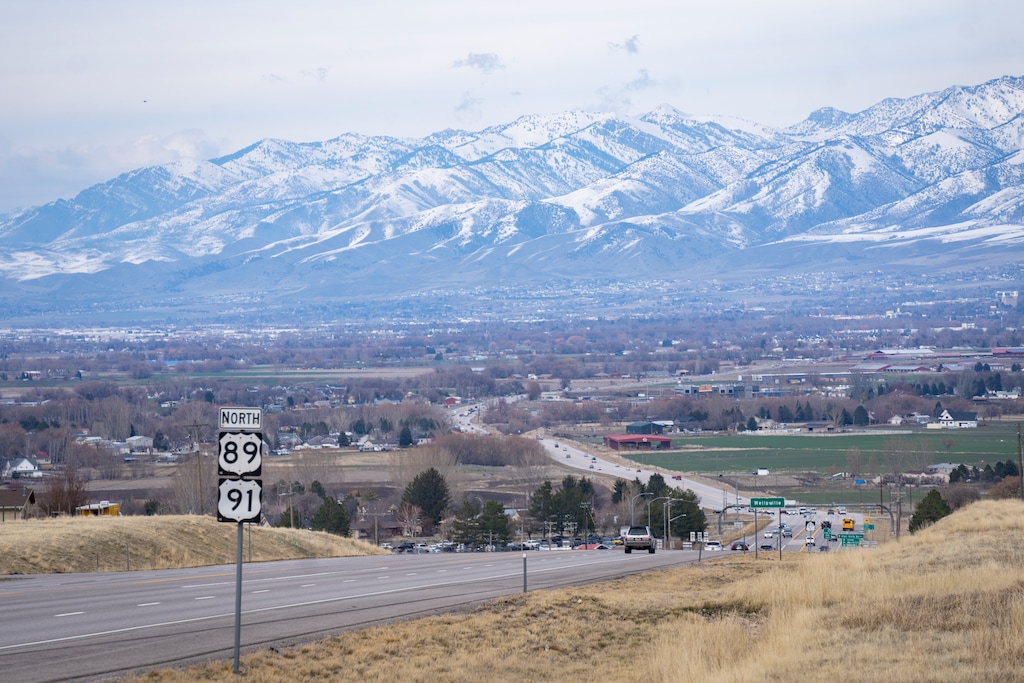
(Bethany Baker | The Salt Lake Tribune) The Utah State University Equestrian Center in Wellsville. As Cache County pays private landowners for their development rights, some wish officials would prioritize public access.
Heidi Christiansen said she voted in favor of the bond back in 2022. As someone from Cache Valley, she wanted to see it preserved. Still, she wishes the bond funding would lead to a more direct benefit to the public, and that means more access.
“I think it should be kind of a top priority, if we’re using taxpayer money,” she said.
Assessing access
Christopher Sands — a member of the Cache Open Space Advisory Committee, the panel that guides the money’s use — said he has worked to preserve undeveloped land in Cache Valley ever since he was first appointed to the county’s agricultural advisory board about 25 years ago.
Doling out public dollars to private landowners, he said, can be an effective way for the county to preserve its open space.
“When you’re purchasing an easement, you’re just buying the development rights off the property,” he said. “You’re potentially paying 75% or less of the total value of a project when you’re just buying an easement on the property as opposed to buying the title.”
This, he explained, lets the county push its money further. The county also works with state and federal agencies who cover portions of the cost, he said.
But because the county is only buying the development rights, he said there is no guarantee members of the public will be able to use the land for much other than the view.
When the Cache Open Space Advisory Committee’s members consider different parcels to preserve, Sands said they tour the properties to get a feel of the land and what the landowner wants to do with it.
Whether the land would be publicly accessible is just one piece of what the board weighs when it considers a new property. Other factors are location, scenic views, agricultural use, waterways and wildlife habitats.
“Public access on an individual property owner’s property is really their decision,” Sands said. “They have a lot of say on that.”
Another member of the Cache Open Space Advisory Committee, Kendra Penry, added that even if people can’t set foot on some conserved parcels, there is still a benefit in protected viewsheds and preserving land near public spaces.
Penry — the executive director of Stokes Nature Center, a nature exploration and education organization — said her nonprofit’s land in Nibley borders property preserved with the county’s bond money.
(Kendra Pendry) A walkway in front of a newly constructed yurt at the Stokes Nature Center’s Nibley site. Kendra Penry, the nonprofit's executive director and a member of the Cache Open Space Advisory Committee, said the parcel benefits because it borders property that the county has paid to preserve, even if that property is closed to the public.
“While they do not allow public access on that property, it actually is public access from our property in that our next-door property will never be developed,” she said. “It adds more value to our property. It makes our property more welcoming.”
Paths of preservation
Public access becomes more important, Sands said, when Cache County’s overarching trails plan calls for paths adjacent to projects the advisory committee considers.
Still, asking owners for trail access is treated as a discussion rather than a stipulation.
That was apparent in April 2024, when the advisory committee was considering whether to buy development rights for Elkhorn Ranch near Nibley. County staff discussed how a potential trail through the property would help them connect larger routes in the system.
Landowner Joe Fuhriman was not open to the idea.
“We’re adamantly opposed against it,” he said. “This is our property. We’ve got a right to privacy.”
Still, the advisory committee recommended the County Council buy the ranch’s development rights. The council ended up using $1.25 million of the bond money, plus additional funding from other groups and government agencies, to do just that.
According to Penry, the county’s plans had an alternative route that went around the property.
“In a case like that, there’s no way to tell the property owner that you can only have this money if you allow this trail when, in fact, there’s already an alternative,” she said. “That is a unique situation, of course.”
Often, Sands said, property owners are concerned with safety and liability of allowing members of the public onto their property.
He pointed out that while Elkhorn Ranch is closed to the public, the county is currently considering buying development rights from properties that already offer public access.
Note to readers • This reporting position is a partnership with Utah Public Radio, a division of Utah State University.
 I’m Brock Marchant, The Salt Lake Tribune’s Cache Valley reporter in partnership with Utah Public Radio. As a valley native, I’ve seen firsthand the issues that people face everywhere from Richmond to Avon — unaffordable housing, dwindling open space and a rapidly increasing population that has cities struggling to keep up. I want to explore local problems by reporting on the ground, not just quote elected officials and news releases. As residents work diligently to overcome challenges, I want to tell their stories and share their solutions. Smart, hard-working people have built the valley’s history, and I’m certain they will frame its future.
As a nonprofit newsroom we rely on donations from readers like you to make this work possible. Donate today to support this reporting.