 Courtney Tanner
Carson Norris was sitting on a paddleboard, the clear blue water lapping at his legs, when he heard the first scream.
The shore was about 50 yards behind him. In front of him, he could see the small outline of a boat. It seemed to be charging closer.
Floating next to him, his cousin and his cousin’s wife also squinted at the horizon. Then they heard the second scream:
“Help! We need help!”
Norris hadn’t planned on wading into Bear Lake that day. But at the sound, he instinctively paddled forward, as fast as his arms would take him.
The boat
Norris, 28, is a former rodeo calf roper. His sliver of a small-town Wyoming accent came through as he recalled what he and his cousin — and other relatives and bystanders on the beach — experienced July 11.
“Oh, it definitely feels like there were some miracles involved,” said Norris’ cousin, Jared Ford, who responded that day.
“Absolutely,” Norris said, nodding his head.
As Norris pulled up to the boat on his paddleboard, a woman on board said her friend was injured. He jumped into the stern, the first stranger to arrive.
He looked down but didn’t see blood, a detail he keeps coming back to.
“I still don’t understand,” he said. “There really wasn’t much blood at all.”
The woman, in her 30s, was lying on the floor with a towel draped over her. Norris quickly realized it was covering where both of her legs had been severely cut.
His brain, he said, immediately registered how bad it was but didn’t let him dwell on it. He remembers thinking, “OK, this isn’t the time to panic.”
There were six or seven other women on the boat, he thinks, and everyone seemed worried but also surprisingly composed. Norris credits their reaction, in part, with helping save the woman’s life. They were calm, so she stayed calm.
The woman wasn’t speaking then. But she was awake and coherent, Norris said.
He scanned the scene for something to use as a tourniquet and clocked a water-skiing rope.
“I just wrapped it around twice and did a square knot to hold it tight,” he said.
(Rick Egan | The Salt Lake Tribune) Carson Norris talks on Tuesday, July 21, 2026, about his experience helping a woman who was seriously injured at Bear Lake.
That casual confidence likely came from his rodeo experience, Norris’ dad later told him. It was one of several key coincidences that day on the beach.
With her injuries knotted, Norris and the other women helped lift the injured woman out of the boat and onto the paddleboard his cousin’s wife had been on. That’s when, Norris recalls, the injured woman spoke to him for the first time.
“I don’t think you have them on right,” he heard her say.
She had picked up her head slightly, eyeing the tourniquets. “They’re too tight.”
Norris responded, “I think that’s a good thing.”
The beach
(Francisco Kjolseth | The Salt Lake Tribune) People recreate in the clear blue waters of Bear Lake at Rendezvous Beach on Thursday, June 30, 2022.
Norris and Ford’s relatives had traveled to the crystalline lake along the Utah-Idaho border for a family reunion. About 20 cousins, aunts, uncles and grandparents were there to relax and enjoy its famous raspberry shakes.
They’d set up camp on a less busy part of the Idaho side. Ford was building a sandcastle with his daughter, 14, and Norris’s nephew, 5, when he first heard the screams.
The 46-year-old civil engineer figured someone had passed out from the heat but saw his cousins heading over to help. He continued adding turrets to the castle.
Then he noticed one of his relatives racing onto shore, dashing across the sand toward his van.
“I’ve got to get my tourniquets,” yelled the cousin, who had been paddling with Norris.
Ford was confused. “For what?” he thought.
Earlier that day, the same cousin had mentioned purchasing those tourniquets to keep on hand for mountain biking trips; he’d learned how to use them in a first aid class just two weeks prior.
The cousin darted back to the water, and Ford followed.
By that time, the paddleboard carrying the injured woman was only 20 feet from shore, pushed by Norris and some of the women from the boat, plus another bystander. When the cousin reached them with his tourniquets, he replaced the ropes.
As he did that, his wife shouted for the time. Ford watched as she wrote 1:32 p.m. in pen on the woman’s forehead. He didn’t know that helps hospital staff know how long a patient’s blood flow has been cut off. The three digits are now burned in his mind.
(Rick Egan | The Salt Lake Tribune) Jared Ford talks on Tuesday, July 21, 2026, about his experience helping a woman who was seriously injured at Bear Lake.
As the group splashed onto shore, Ford sprinted back to his wife and daughter.
“Don’t look over there,” he told them sternly. His wife worked to distract the kids nearby as others rushed to help the woman.
Ford remembers his grave first thought: “This lady is not going to make it.”
The cuts were rough — incomprehensibly jagged. The only explanation, he knew, was that she’d somehow been struck by a boat propeller.
“What are we supposed to do?” he recalled thinking. “What can we even do?”
The wait
As Norris worked to get the injured woman into some shade, he spotted a canopy nearby and screamed at the party underneath it to clear their metal picnic table.
It was unusually close to the water, he recalled, because the group had dragged it down to shore earlier; a trail still lined the sand.
Lying atop the paddleboard now resting atop the table, the injured woman remained quiet. An emergency helicopter was 10 minutes out, a 911 dispatcher had told the woman’s niece. People took turns trying to comfort her.
“You’re going to be OK,” they said. “It’s all going to be OK.”
Then the injured woman spoke for the second time.
“Will someone please say a prayer for me?” Norris and Ford remember her asking.
A few people pointed at Ford, who is a member of The Church of Jesus Christ of Latter-day Saints, and he said a few words, he recalls. He didn’t know the woman’s faith but remembered her saying she needed to live for her three kids. They were later identified in a GoFundMe as ages 2, 8 and 16.
“She was incredible — very strong, very mentally strong,” Norris said.
(Rick Egan | The Salt Lake Tribune) Bear Lake, as seen on Friday, July 19, 2024.
As Ford ended with an “amen,” the sirens of a police car neared. Norris’ dad and another man waved beach towels to help direct the officer to the woman.
Another officer who had been patrolling the water also pulled his boat in close and jumped off. Ford helped anchor it while the officer approached.
An EMT, who had been driving down the beach, stopped as well. Those three first responders were able to hang an IV bag, Norris recalled, and bystanders began to peel off.
Listening for the sound of the chopper, Norris’ mind drifted to a time nearly four years earlier, when strangers instead reassured him that he would be OK.
The memory
Norris had been driving a semitruck along State Road 30, the highway between Tremonton and Logan, as he hauled a regular run of grain or dairy for the trucking company he created.
It was late, around 1 a.m., and darker than he’d ever seen the canyon — until two bright headlights swerved across the yellow lines toward him.
When Norris was able to wrench himself out of the cab that December night, he walked around in the dark, he said. His jaw was broken, his nose was busted and the bones in his left arm were shattered.
He could feel the pain but couldn’t see much of what caused it until first responders arrived. Then, lit up by red-and-blue lights, he saw the car that struck him “crinkled up like a pop can.” Its driver died on impact.
It took Norris months to recover, and he still suffers from PTSD.
But he remembers the bystanders and medics who calmly told him, “It’s all going to be OK.” And he credits them with helping him heal.
Now, he wonders if the biggest coincidence at Bear Lake was that he was there, closest to the boat and armed with his own experience, when the woman needed help.
“Everything just lined up so well,” he said.
“There’s a lot of miles of beach where that boat could’ve ended up,” Norris added. “It’s pretty random if you think about it.”
Recounting the rescue, Norris and Ford repeated several times that they don’t want credit or recognition. They just wanted to help, and others jumped in, too.
“We were just one part,” Ford said.
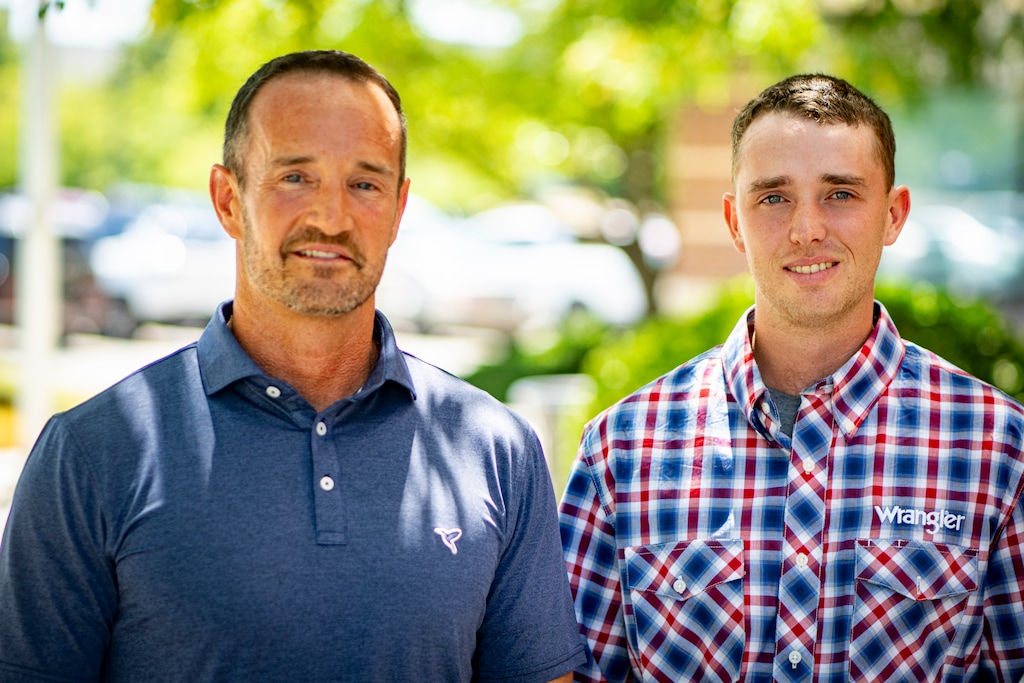
(Rick Egan | The Salt Lake Tribune) Carson Norris and Jared Ford talk on Tuesday, July 21, 2026, about their experience helping a woman who was seriously injured at Bear Lake.
But authorities have been more explicit: “These actions ultimately saved her life,” the Bear Lake County Sheriff’s Office said in the days after the accident.
It ended up taking about 30 minutes for the emergency helicopter to arrive, Norris and Ford recounted. They helped direct people to move so it could safely land.
The woman was flown to a hospital, where both of her legs were amputated, according to the sheriff’s office. She is stable. But the accident shocked the little tourism community surrounding the lake and the many who grew up visiting the gem each summer.
Norris and Ford hope the woman recovers as best she can. Norris has since spoken with her husband, to share what he remembers.
The husband told Norris he hopes they can meet one day. Norris said he was able to meet the first responders who came to his crash, and it helped him find closure.
He isn’t sure he’ll ever wade in the water at Bear Lake again. He hadn’t planned to that day, but among the other coincidences, he’s glad he did.