 Courtney Tanner
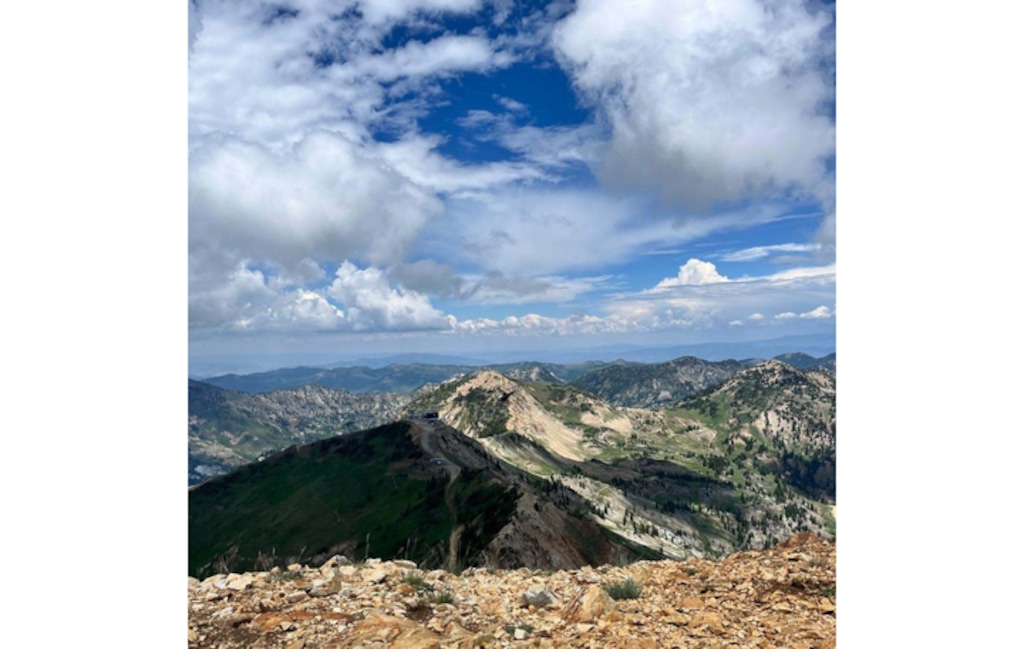
A man hiking with his brother Saturday was killed after being hit by lightning at the top of American Fork Twin Peaks — the highest point in Salt Lake County.
The man has since been identified as 59-year-old Craig Nelson, according to the county sheriff’s office.
The brothers had started their hike by riding Snowbird’s ski tram partly up the mountain on the Little Cottonwood Canyon side earlier in the morning, said Sheriff Rosie Rivera during a news conference Monday. It’s a hike they had done together many times, she said.
Around 10:30 a.m., they stopped to eat and noticed shifting weather. The surviving brother later told law enforcement that they saw no lightning, though, and decided to continue forward, Rivera said.
The peaks sit on the border of Salt Lake County before the land becomes Utah County, giving it the name as seen from the city of American Fork below. The summit sits at an elevation of 11,461 feet. Starting from the tram, it’s about a mile to the top and about 1,000 feet in elevation gain.
The trail is faint in some places and includes steep scrambles across rocky ridgelines, according to a popular online hiking blog.
Rivera said the weather there can turn quickly: “It’s very unpredictable.”
The surviving brother, she said, reached the east peak first at about 11:40 a.m., then decided to quickly turn around and head back down as the weather worsened. Nelson, he told officers, continued up to the peak.
The brother saw Nelson collapse from about 20 feet away, Rivera said, and believes he was struck by lightning.
The brother ran back to the tram and called 911 once he had phone service. That call came in at 12:01 p.m.
Once the storm had cleared, the Utah Department of Public Safety landed a helicopter. Nelson was pronounced dead at the scene.
(Salt Lake County Sheriff's Search and Rescue) Crews recovered the body of a 59-year-old man who was struck and killed by lightning while hiking American Fork Twin Peaks on Saturday, July 18, 2026
Rivera said an investigation will remain open until the state medical examiner’s office returns the results of an autopsy.
Jeremy Opp, a Utah resident, said he’d driven to the top of Little Cottonwood Canyon on Saturday and saw the storm roll in quickly. He was meeting a friend for a hike and finally got a spot in the parking lot around 11:30 a.m.
It was raining, though, so the two sat in his car for about 20 minutes. It didn’t look too bad, and they didn’t see any lightning, but it was thundering and he felt a “weird uneasiness.”
When the storm didn’t let up, they decided to head back down the canyon.
The lightning strike, he said, “happened minutes after I and a friend turned around.”
How to respond to lightning while outdoors
Rivera and the Salt Lake County Sheriff’s Search and Rescue team shared some tips for reacting to lightning storms while in the outdoors:
• Stay away from peaks if there are signs of a thunderstorm approaching.
• Quickly try to move to a lower elevation.
• Keep at least 300 feet away from a body of water.
• If you are carrying metal, particularly a trekking pole, abandon it.
• Avoid tall trees, fences and power lines.
• If it’s too late to flee and you need to shelter in place, crouch down to the ground, like a catcher in baseball, putting your hands on your head and bending forward. Don’t lay down; you want to minimize the surface area that your body is in contact with the ground, which can include crouching on top of your backpack. Stay in this position for 30 minutes after you hear the last clap of thunder. Lightning can also strike outward ten miles from a thunderstorm.
• Don’t hide under a cliff or in a cave. The National Park Service notes that lightning can travel through rock and still strike you.
The biggest thing that Rivera said recreationists can do is plan ahead.
“Check the forecast before you head out,” she said, “pay attention to changing weather conditions throughout your hike and be prepared to change your plans if storms move into the area.”