 Andy Larsen
What are Utahns’ favorite beers and liquors — and how has that changed over the years?
I looked at the Utah Department of Alcoholic Beverage Services’ sales records since 2019. These records include items sold in Utah liquor stores, not the Budweiser and Coors you’ll find in your grocery store’s beer aisle. They also include liquor sales to restaurant and bar licensees, who must buy their beverages from DABS.
I was surprised by much of what I found.
To show the changes, I decided to return to an old data-viz favorite: bar chart races.
Utah’s top liquors
(Rick Egan | The Salt Lake Tribune) Tito's Handmade Vodka.
Since 2019, Tito’s Handmade Vodka has held the No. 1 spot in terms of dollars sold. But it used to be a close race with Jack Daniel’s and Jameson. Now fast forward to 2026, and as sales of those whiskeys have declined, Tito’s has nearly doubled.
That reflects nationwide trends as well. A 750 milliliter bottle of Tito’s costs $20 at DABS stores, which means, as Food Republic explained, “it definitely isn’t the cheapest vodka on the market. However, its smooth texture and taste, which draw comparisons to more top-shelf versions, offer great value for the price point.”
But in terms of the number of bottles sold, it’s Barton’s Vodka that retains the No. 1 overall spot.
Canned cocktails on the rise
Look at the last year of movement and you can see an explosion in the sales of ready-to-drink canned cocktails. Cutwater’s Margarita is now third overall in sales, with Monaco’s Citrus Rush and Copper Can’s Moscow Mule close behind.
Aperol spritzes are everywhere
(Rick Egan | The Salt Lake Tribune) Aperol.
There have been surprising risers further down the list over the years. Sales of Aperol, for example, have increased nearly fourfold. You may have noticed more Aperol spritzes at your happy hour lately.
George Clooney’s tequila brand, Casamigos, has seen sales quadruple as well.
The biggest dollar sales growth over the last year goes to Cutwater’s Margarita (up $760,000 this year), but coming in close second is Crown Royal’s chocolate-flavored whiskey (up $724K). That’s a new product, and while reviews online are mixed, Utah drinkers appear to have a sweet tooth.
Overall, what’s Utah’s most popular liquor?
Whiskey accounts for about 32% of Utah liquor sold, compared to 26% for vodka. Tequila and mezcal, a combined category, come in third.
How about on the beer aisle?
We’ll once again look at beer sales by sales revenue first, then look at individual units sold.
Since 2019, three beers have been the No. 1 seller in Utah liquor stores: Natty Daddy, Squatters’ Hop Rising Double IPA, and Templin Family’s Ferda Double IPA.
An IPA on the rise
(Rick Egan | The Salt Lake Tribune) Ferda.
It’s been pretty remarkable to see Ferda’s quick rise in the rankings. It wasn’t brewed until 2019 and didn’t make a top 10 list until 2022. Now it’s the highest-grossing beer in Utah liquor stores — and by a huge margin. It sells for $3.95 in a 16-ounce can. Hop Rising, a longtime Utah staple, sells for $2.09 in a 12-ounce can.
Beyond that, New Belgium’s Juice Force and Epic’s Chasing Ghosts, both Hazy IPAs, have both exploded in sales in recent quarters to take spots in the top 10. Fisher Brewing’s Hazification, another Hazy IPA, didn’t finish in the top 10 but has seen sales increase by a whopping 20 times since June of last year.
National brands are on top in terms of cans sold, but is local growing?
When sorted by the number of bottles or cans sold, the list tilts towards more national brands.
Natty Daddy has remained No. 1 throughout. It’s an 8% alcohol version of Natural Light’s flagship product and costs $1.09 a can — a budget buy — but has seen its sales slip significantly since the 2019 highs. Icehouse sales are only a quarter of what they once were. Some brands, like Pacifico and Stella Artois, saw liquor store sales slip as they moved into Utah grocery stores. Modelo Negra Dark Ale has become popular.
You can see a bit of a trend here, though: Utah-brewed beers are becoming a larger percentage of sales at Utah liquor stores. Utah beers are now 33% of sales overall, compared to 25% in 2019.
Methodology
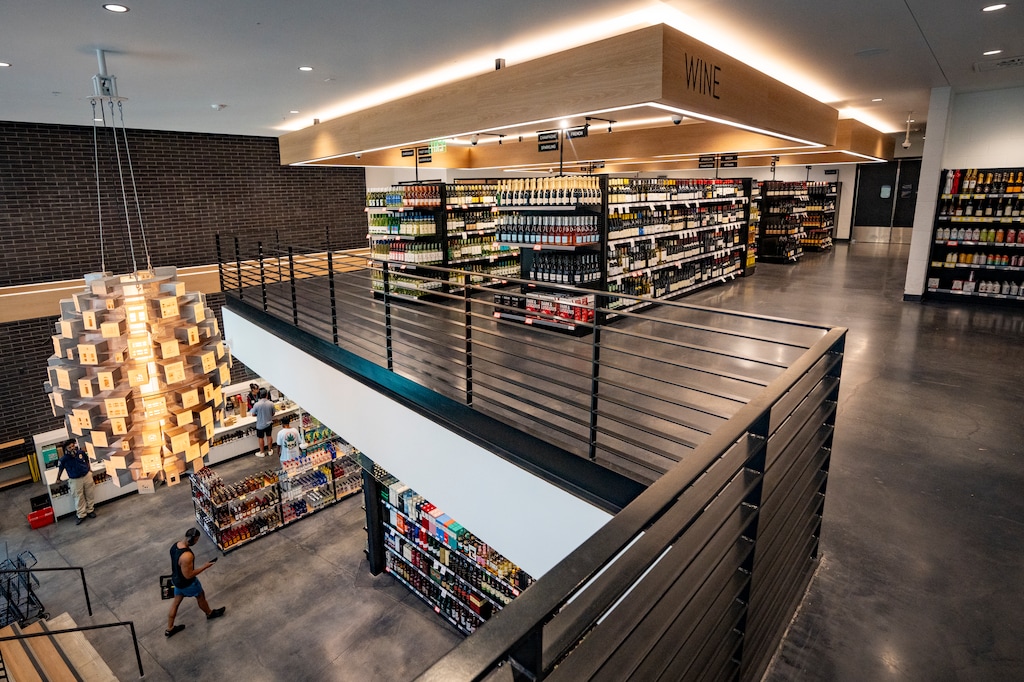
(Rick Egan | The Salt Lake Tribune) A state liquor store in downtown Salt Lake City on Thursday, July 16, 2026.
For every item sold in Utah’s liquor stores, DABS releases sales reports monthly.
Right now, that page has data from only the last 14 months, but Wayback Machine queries for the DABS’ website gave us records back to 2019. Overall, it’s a lot of information to sort through: 563,000 rows in all, tracking how much of each item was sold, at what price, every month.
In general, I chose to use quarterly views when we look at sales, which reflect short-term changes better than annual numbers, but are more resilient to outlier sales periods and are generally easier to look at than monthly data. I also combined sales figures for different volumes of the same liquor sold.