Samantha Moilanen
Tremonton • Utah’s sprawling “hyperscale” data center is a go.
After delaying its decision by a week, the three-member Box Elder County Commission voted unanimously Monday to approve the massive energy and data campus backed by Utah’s Military Installation Development Authority and celebrity investor Kevin O’Leary.
MIDA approved the project late last month. The commission’s vote allows MIDA to create the project area — which is mostly made up of privately owned, unincorporated land within the county — where it can offer an array of incentives to the developer.
“We need to realize and remember that everybody has property rights,” Commissioner Tyler Vincent said, “and that they can do what they would like to do with their property.”
[Read more: Catch up on our live coverage of the meeting.]

The crowd responded with a chorus of jeers and shouts. One man in the crowd yelled, “it’s not like we are being heard here anyway.”
“There is no one on this commission or any other county elected official that is going to benefit from this project, financially or otherwise,” Commissioner Lee Perry said.
After the meeting, commissioners said they reviewed more than 2,500 public comments from an online form on the county website and “considered all of them in our decision making process.”
“Our vote today had nothing to do with water or air quality,” Perry said at a news conference. “Those are not issues that the county has any control over,” he added, noting the water rights tied to the project are held by private landowners.
The commission’s decision came after hundreds of protesters descended on the Box Elder County fairgrounds in Tremonton, where the county had moved the meeting to accommodate a larger crowd. Rowdy protesters let out frequent outbursts, booing the panel as Vincent and other county officials spoke.
“People over profits!” one yelled as commissioners heard a presentation on anticipated tax revenue. “Cowards!” another chimed in.
(Rick Egan | The Salt Lake Tribune) Members of the crowd react as commissioners vote to approve a data center campus during a Box Elder County Commission meeting at the county fairgrounds in Tremonton on Tuesday, May 4, 2026.
“For hell’s sakes, grow up,” Commissioner Boyd Bingham said to the raucous crowd. “This is beyond a joke.” Moments later, the commissioners left the room, saying the meeting would continue virtually.
“Shame!” the crowd chanted in unison after the commissioners left. Those chants continued after commissioners cast their final votes.
After the decision, Shane Jenkins, a Box Elder County resident, said he felt the deal was handled “under the table” and moved forward quickly without meaningful public input.
“It’s sickening,” he said.
(Christopher Cherrington | The Salt Lake Tribune)
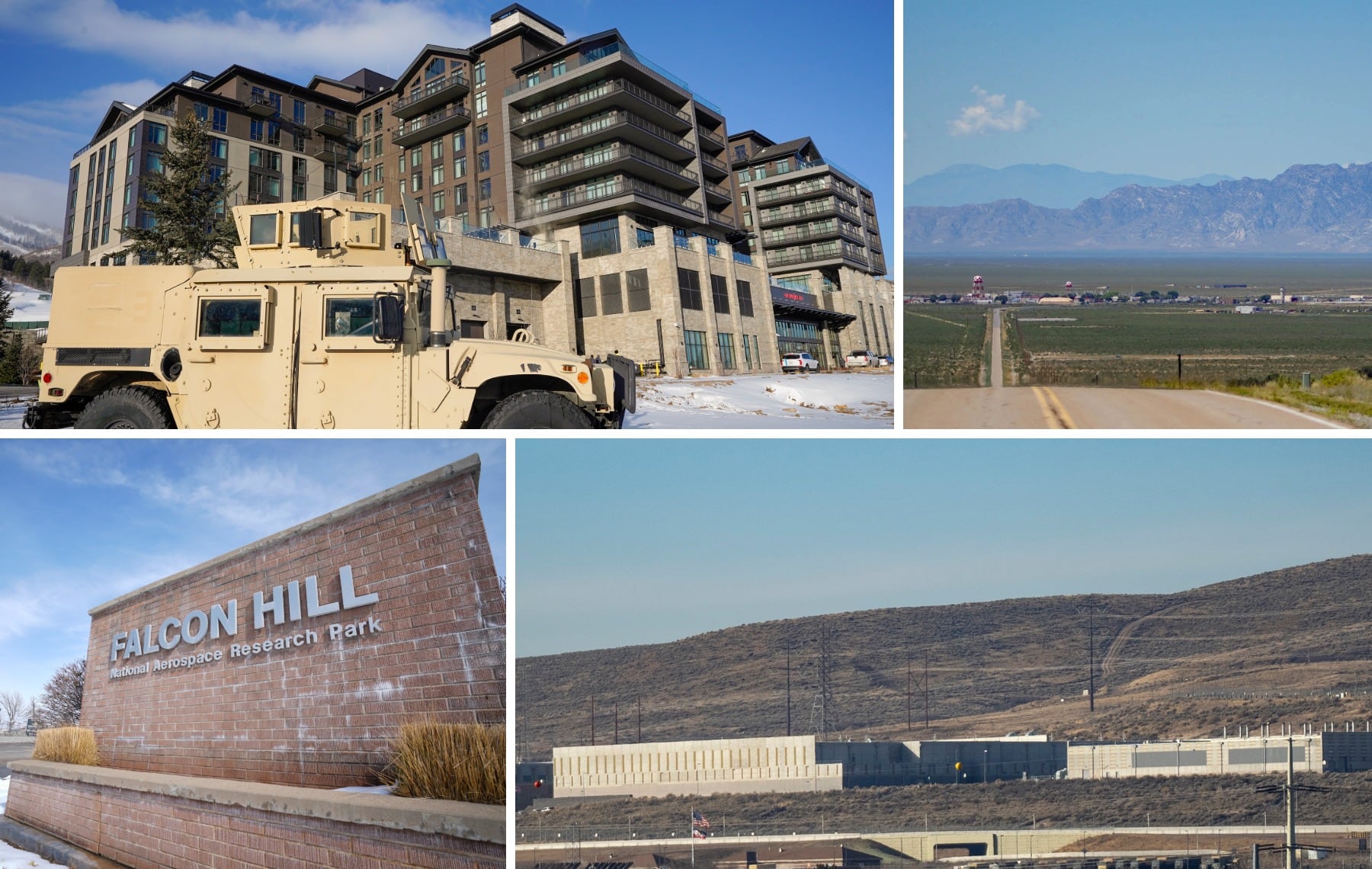
The project, dubbed Stratos by MIDA, will occupy some 40,000 acres centered in Hansel Valley north of the Great Salt Lake. O’Leary will be its lead developer.
Backers say the campus will fund modern buildings at Hill Air Force Base, leave ratepayers unaffected by generating its own power with natural gas, reuse its water, bring in new jobs and keep the United States competitive against China in the artificial intelligence race.
Casey Hill, a spokesperson for O’Leary Digital, said at the news conference that the first phase of the “over billion-dollar” project is expected to begin within the “next few months.”
MIDA was approached by a representative of the U.S. Air Force about working with a partner to identify a site in Utah for a hyperscale data center “because it’s a national security imperative,” said Paul Morris, MIDA’s executive director.
The ask followed an executive order from President Donald Trump directing the expansion of hyperscale data centers and power resiliency nationwide, Morris said.
Water a key point of contention
(Rick Egan | The Salt Lake Tribune) Pattilyn Mclaughlin joins protesters at the Box Elder County Commission meeting in Tremonton on Monday, May 4, 2026.
MIDA has said the data centers on the campus would operate on a closed-loop system that reuses water, leading to water use that is more akin to a large office campus than a traditional industrial use.
Opponents, however, say the data campus could strain water supplies that are already limited.
Ahead of the meeting, some 400 people crowded outside the fairgrounds’ fine arts building, a sea of small yellow signs bobbing above the group, each stamped with the same message: “NO data center.”
The crowd chanted “no data center” and “we want water.” Handmade signs carried similar warnings: “This isn’t the place,” “DON’T sell us out,” “You can’t drink data,” and “Save our water.”
(Rick Egan | The Salt Lake Tribune) Protesters at the Box Elder County Commission meeting in Tremonton on Monday, May 4, 2026.
Emily Box, who traveled from Logan and held a sign reading “save our beautiful space,” joined the protest ahead of the meeting for fear of how the project will affect the drying Great Salt Lake.
“I do not want my children to have to move away from Salt Lake City because the Great Salt Lake has dried,” Box said.
The data campus operators have said they will purchase roughly 3,000 acre‑feet of water rights, and have around 10,000 acre‑feet under contract near Snowville if needed.
That’s enough water to support the indoor water needs of more than 20,000 Utah households. The Division of Water Rights has received one application for water so far — to transfer 1,900 acre-feet currently used for irrigation by Bar H Ranch to the developers. The division said last week that it expects more applications from the data center developers soon.
The Bar H water rights change application indicates much of the water will be used for a natural gas station that will power the data center, along with water for cooling the data centers’ servers. The state has received hundreds of protest letters filed in that water rights application submitted by the developer for the project.
Additional development plans needed
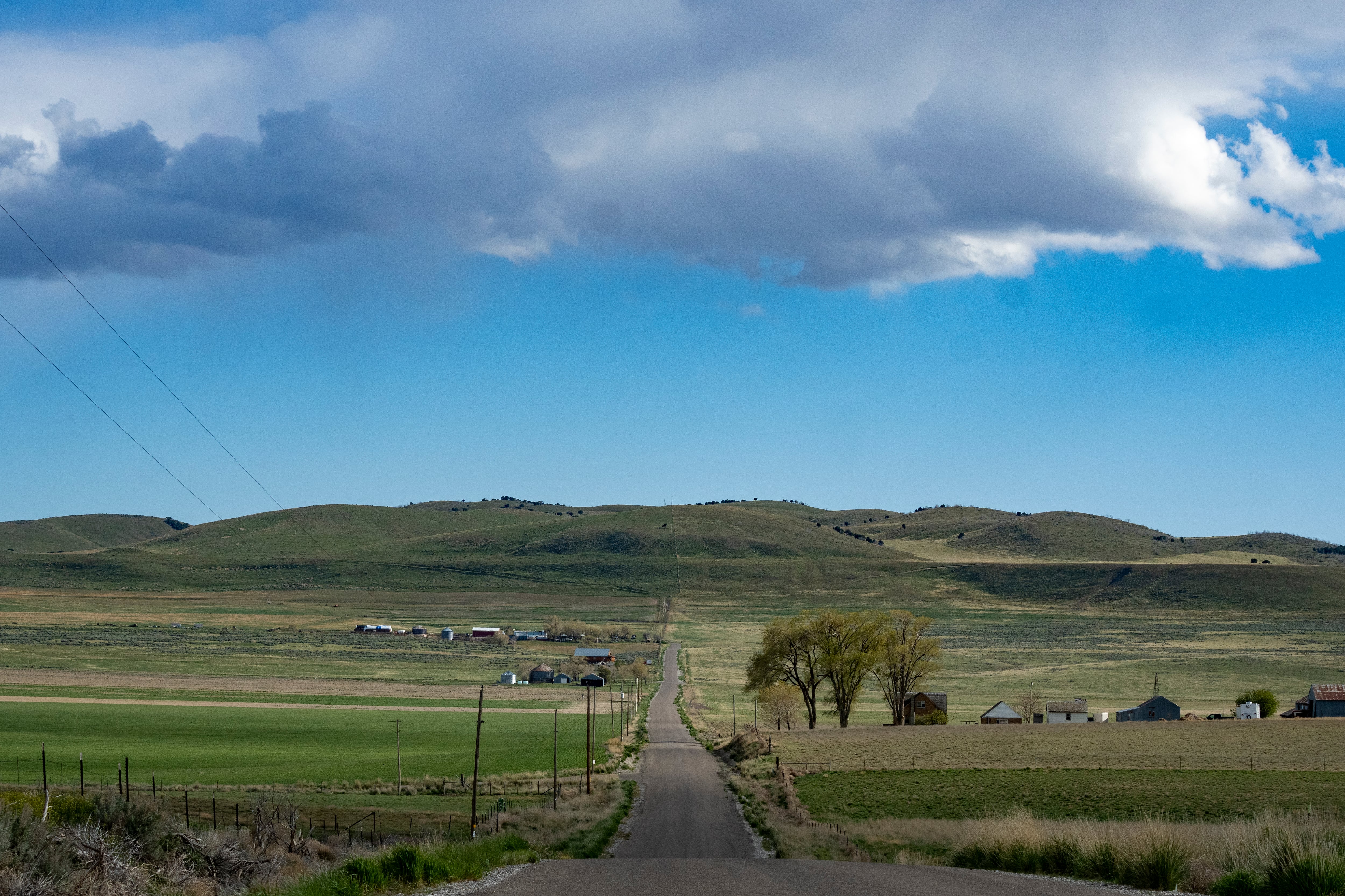
(Trent Nelson | The Salt Lake Tribune) Hansel Valley on Friday, May 1, 2026.
The Hansel Valley land is privately held and MIDA documents indicate that each of the landowners has provided consent so far.
Individual master development plans, however, will need additional approval before construction can occur. Landowners will need to sign off on those plans.
The first phase of the project is expected to require 3 gigawatts of power. Utah as a whole uses about 4 gigawatts. At full buildout, the Stratos campus is expected to use 9 gigawatts, according to MIDA.
That energy will be generated by tapping into a natural gas pipeline that runs through Hansel Valley. The project will create all its own power, project officials have said.
Watch the full meeting