 Palak Jayswal
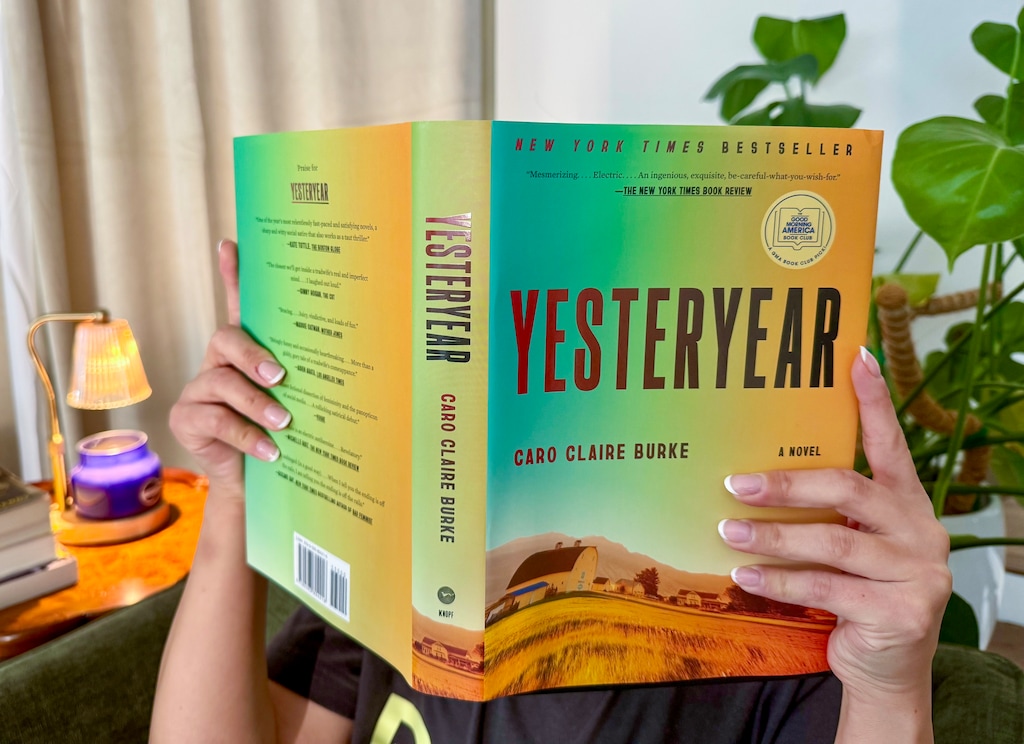
Caro Claire Burke’s debut novel “Yesteryear” is everywhere. It’s the pick of book clubs, the topic of think pieces in publications like “The New Yorker” and “The Atlantic,” and the subject of seemingly every fiction podcast out there.
In Utah, there’s plenty of buzz around the thriller, especially with its vaguely Beehive State inspiration.
Love it or hate it, it’s a book many are talking about.
Here’s why.
The Utah influencer connections
Natalie Heller Mills, the protagonist, is a tradwife — traditional wife — influencer whose Yesteryear Ranch sells handmade goods online and whose multiple children portray a pretty picture to her thousands of social media followers.
Many readers have drawn comparisons to Utah’s Hannah Neeleman, the influencer behind Ballerina Farm.
But Burke has insisted that her character isn’t a satire of one person. Social media’s growing tradwife culture provides a number of examples, she said, including moms from “The Secret Lives of Mormon Wives” and Nara Smith, an influencer with 4.9 million Instagram followers.
“There are so many examples of this vision,” Burke told Vogue earlier this year. “They’re all presenting as perfect mothers who have a crazy hip-to-waist ratio, and many children, and they’re always smiling. The thing I really wanted to focus on was that image, because it’s propaganda.”
Neeleman spoke to Vulture about speculation that she inspired the main character in June.
“I’ve been the butt of jokes and Reels that I’ve seen,” Neeleman said when asked about the book. “It didn’t really surprise me. I think it just comes with the eyes. There’s so much discourse, like, ‘Oh my gosh, it’s such a big family, and there’s no way she can be doing this.’ So it was like all these ideas are bubbling up into this fictional, entertaining book about tradwives. I’m surprised it didn’t come sooner, honestly.”
The Utah take on ‘Yesteryear’
The book doesn’t even define the character’s religion. Heller Mills is vaguely Christian.
But the themes instantly resonate — for better or worse — with Utah readers, said Amanda Warren, a co-founder of Bookish SLC, who moderated Burke’s tour stop for “Yesteryear” here earlier this year.
“The Christian hatred that Natalie spews is poetic. It’s so on the nose that you can’t help but laugh at her internal dialog,” Warren said.
For example, Heller Mills will have unkind thoughts about those around her, like her social media producer Shannon, and then immediately be filled with remorse and ask God for forgiveness.
“I feel like the reason it hits so hard at Utah is because of the way that there can be this purity culture here … this undercurrent of elitism that comes with Utah Mormons,” Warren added.
Even if the book isn’t directly tied to the Latter-day Saint faith, Warren said, it feels “next door” for Utahns because of how ubiquitous tradwife culture and religion can seem here.
As such, Heller Mills’ efforts, and often failures, at being a good Christian mother either overdelivers or underdelivers for readers here.
“Motherhood, kindness, friendship and community [don’t] come naturally to her. Those things that are kind of fundamental and intrinsic to Christianity,” Warren said. “For those that are protective of Christianity, of course, that would be harder to swallow.”
A scholar weighs in
Rebekah Duckett, who has studied gender and race in Latter-day Saints art, said the character’s dedication to the performative was what stuck out to her the most in the book.
“Even if you don’t really have a physical audience, you’re always performing your motherhood for this imaginary audience,” Duckett said. “The thing that really struck me is that Mormon women are so successful at being influencers, like this woman in the book, because they are taught to behave in a way like you’re performing for someone at all times.”
That idea of performance, left unchecked, ultimately skews Burke’s protagonist’s ability to understand what is right and what is wrong. It reminds Duckett of what happened with the Utah influencer, Ruby Franke, who is currently serving a prison sentence for child abuse.
“She became so enmeshed in her own performance of self that she gave up any sense of reality,” Duckett said.
The book also points out how this performance can be monetized.
“When you’re trying to become an influencer, the product that you’re presenting to the world is yourself,” Duckett said. “The way that influencers are able to maintain their sanity is they start to shift away, and the product becomes something else that they’re trying to sell.”
Outside of Utah, Duckett said she suspects the fascination with the book directly correlates with an interest in the “facade of influencers.”
“A decade and a half ago, when people were first becoming interested in Mormon mommy bloggers, people just couldn’t wrap their heads around what was real, and they also find it a little bit comforting to step into this fantasy,” Duckett said.
The book might be polarizing for some Latter-day Saint women, Duckett said, because they wanted to see a bit more of themselves in Heller Mills — someone proud to be a stay-at-home mom.
There’s also a twist in this time-traveling thriller. We won’t give it away, but some readers were upset.
Love it or hate it, though, Duckett and Warren agree: “Yesteryear” is a hot topic.
“What’s so important about ‘Yesteryear’ is that it inspires people to have conversations,” Warren said.