I woke just after 3 a.m. unable to breathe and with a chest cramp that, for me, signals only one thing — a panic attack. It took a few minutes to catch up to what my panic had already figured out and, when it did, an unsettling dread joined the chest cramp and I began to sort the facts.
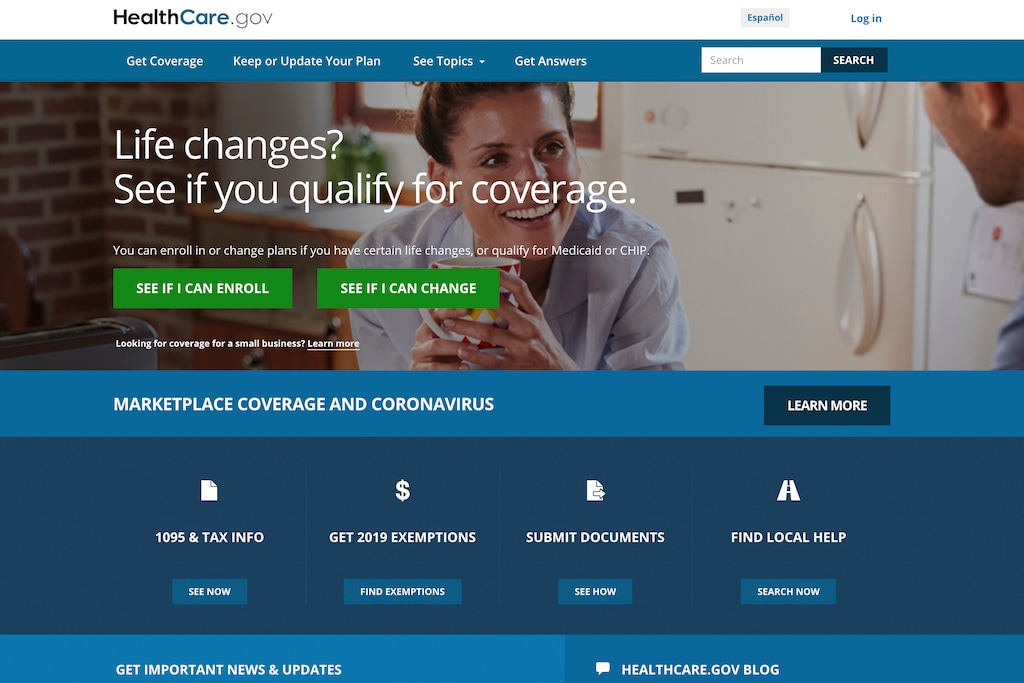
The night previous we had our annual meeting with an insurance broker to go over our choices for our 2026 healthcare. The news? Bleak. Out of two options, we picked the one that would cover doctors actually in our town instead of the cheaper alternative that would only cover five random doctors but no hospitals or tests. Our first payment, triple the cost from what we are paying now, is due sometime within the next month, just after our last payment for our current plan.
My husband started his business nearly 20 years ago. At that time, I was worried about not qualifying for private insurance due to pre-existing conditions I had sustained surrounding the birth of our son while my husband was serving in the military. Obamacare was on the horizon and, when it passed in 2010, it finally ended expensive coverage for me.
After our broker meeting, I was curious how much our healthcare premiums had changed. From 2009 until 2019, I only have insurance totals from all of our various insurances (health, car, home, work, etc.), but in those early years we were saving around $850 a month to cover it all. I wish I knew what specific portion of that was medical, especially in those couple of years before the Affordable Care Act passed.
Saving of all insurances lumped together topped out at $1,400 a month in 2018. Starting in 2019, we were paying $950 a month for medical insurance, $990 in 2020, $1,020 in 2021, $1,075 in 2022 and $1,270 a month in 2023. In 2024, we finally qualified for a little relief in the form of subsidies and our bill went down to $800 a month instead of the $1,800 it would have been. In 2025, we paid $860 a month.
Being self-employed, you cobble together whatever system works for you to put money aside for months that are a little lean while making sure you keep out money for taxes and medical costs and retirement and life. But there is absolutely no system for any working person that gives the ability to pay a bill that is three times higher from one month to the next.
The “cheaper” option which covered nothing and which we ultimately turned down? $2,100 a month.
The option in which we can stay in our town and not head at least an hour away any time we need medical care? $2,400 a month.
In mid October, I tried to contact my members of Congress, urging them to work on extending health care subsidies while reopening the government. I gave them our personal story, trying to show them the damage to small businesses if they did not. I asked them to do this in tandem with opening the government and working toward more permanent solutions to solve the cost of medical care in this country. It was nearly a week before I heard anything at all.
I am aware of Mike Lee’s reputation for not answering constituents and was therefore not at all surprised when it proved true. Blake Moore, my representative, finally reached out — but he ignored my situation completely. John Curtis also ignored my situation. He did say this, however: “On September 30th, I voted to keep the federal government open and to prevent unnecessary harm to hardworking, taxpaying families in Utah and across America. Sadly, the measure failed…and once again Washington’s dysfunction has forced a shutdown. Utahns know the simple truth: you prepare, you live within your means, and you finish the job.”
I was confused at how, exactly, we are supposed to “prepare” in this situation. I grow more and more angry as I go over our budget with a fine-toothed comb, trimming where I can, negotiating our non-negotiables and obsessively checking every line item to plug holes, bandage hemorrhages and wonder why we are the ones constantly admonished to be smart with our money, to suffer the sins from those in power.
I am completely aware that we fall into a small box of people who will be able to keep coverage, despite the price tag. My heart hurts for the ones that cannot. It is estimated that between 4 and 7 million people will lose their health care coverage as the subsidies expire. And while we are not in that category this time, I worry about how many more years until we are.
This is not sustainable, and it feels like there is no one coming to help.
(Tawnya Gibson) Tawnya Gibson is a freelance writer living in northern Utah.
Tawnya Gibson is a freelance writer living in northern Utah. Her work has appeared in TODAY online, Newsweek, Zibby Mag, Under The Gum Tree, Sky Island Journal and Blue Mountain Review (among others) and she was a longtime contributor to Utah Public Radio.
The Salt Lake Tribune is committed to creating a space where Utahns can share ideas, perspectives and solutions that move our state forward. We rely on your insight to do this. Find out how to share your opinion here, and email us at voices@sltrib.com.